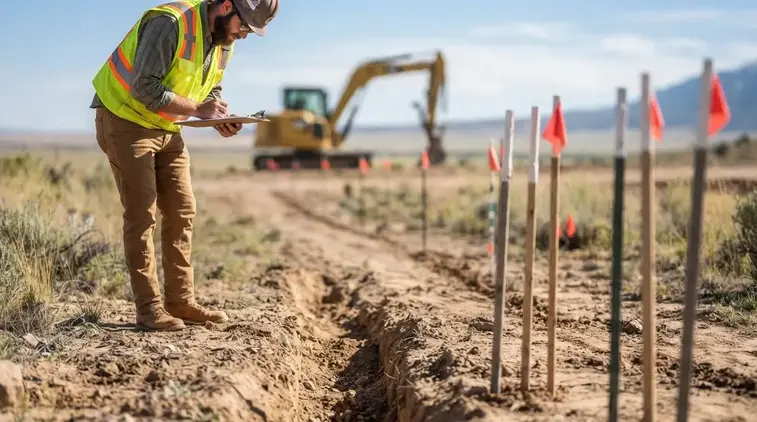
Utility Trenching • Underground Infrastructure • Rural Site Development

Connect With Local Experts

(719) 695-7224

⭐ Utility Trenching • Underground Utility Excavation • Electrical Trenching • Water Line Trenching • Communications Conduit • Septic Related Trenching • Off Grid Utility Infrastructure • Rural Site Development • Underground Infrastructure Across Costilla County

Utility Trenching & Underground Utility Excavation in Costilla County, Colorado

Rural properties often need dependable underground trenching for electrical service, water lines, communications conduit, septic related infrastructure, off-grid systems, and other utility connections. Properly planned trenching can help create the underground pathways needed to connect a homesite, cabin, well, septic system, solar system, or other rural development project. Costilla County Land Services provides utility trenching, underground utility excavation, trenching for rural infrastructure, and site excavation services throughout Costilla County.

Serving San Luis, Fort Garland, Blanca, San Acacio, San Francisco, and rural properties throughout Costilla County and the surrounding San Luis Valley.

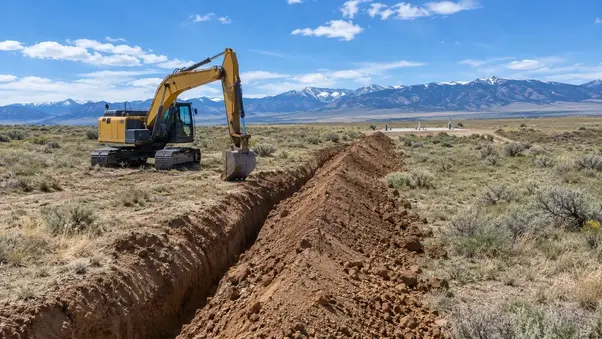
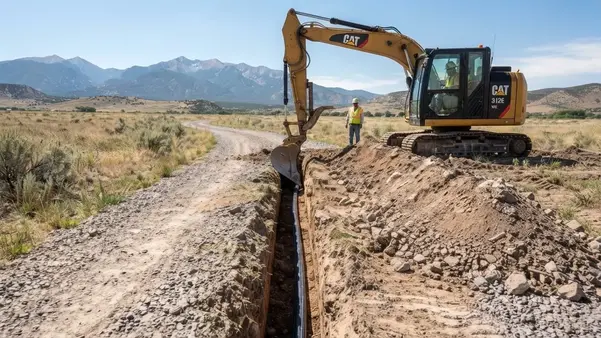
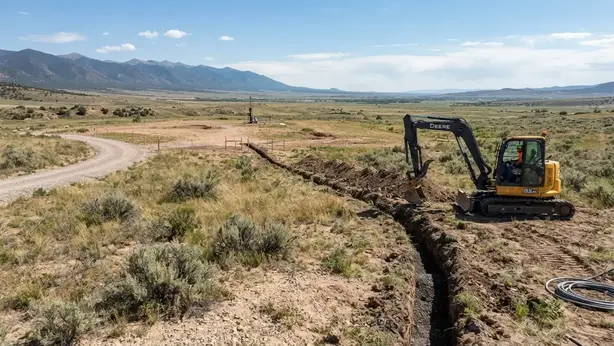
Utility trenching and underground infrastructure excavation on rural property in Costilla County Colorado
Electrical & Utility Trenching Excavating utility corridors for electrical lines, conduit, service connections, and other underground infrastructure serving rural homesites, cabins, workshops, and property improvements.
Water, Well & Septic Connections Trenching for water lines and related underground connections between wells, tanks, homes, septic infrastructure, and other components of a rural property development project.
Communications & Conduit Preparing underground routes for communications lines, low-voltage systems, conduit, and other utility infrastructure where buried pathways are part of the property development plan.
Rural & Off Grid Utility Infrastructure Supporting rural and off grid development projects with trenching that can connect utilities and infrastructure across larger properties, homesites, cabins, wells, septic systems, and solar installations.

Utility Trenching for Rural Property in Costilla County, Colorado

Utility trenching is often one of the less visible but more important parts of developing rural property. A homesite, cabin, workshop, outbuilding, well, septic system, solar system, or other improvement may require underground routes connecting one part of the property to another. The right trenching plan depends on what utility is being installed, where it needs to connect, how the route crosses the property, existing improvements, equipment access, and how the site is expected to develop over time.

Planning a utility trench is not simply a matter of digging from point A to point B. A rural property may have long utility runs, undeveloped access, existing driveways, future building sites, wells, septic infrastructure, drainage features, and multiple utilities that need to work together. Establishing the proposed routes before major site work begins can help reduce conflicts, unnecessary excavation, and expensive rework later in the development process.

  • Electrical Service Trenching:
    Electrical service may require an underground route between a service point and a home, cabin, workshop, garage, or other improvement. The trenching route should be coordinated with the electrical installation plan and the locations of existing and planned property improvements.
  • Water & Well Connections:
    Rural properties may need underground water lines connecting a well, storage system, pressure equipment, residence, cabin, or other point of use. The trench route should be considered alongside the well location, building site, water system layout, and other underground infrastructure.
  • Septic Related Excavation:
    Septic systems can involve underground piping and excavation between buildings and system components. Trenching should be coordinated with the overall septic layout, proposed building location, site conditions, and other underground utilities rather than planned as an isolated excavation.
  • Communications & Internet Conduit:
    Rural properties may use underground conduit for communications, internet, low-voltage systems, or other connections. A planned route can connect a service point with a residence, cabin, workshop, outbuilding, or other improvement while accounting for future property development.
  • Off-Grid Solar & Utility Routes:
    Off-grid properties can require underground routes associated with solar equipment, battery systems, buildings, water systems, and other infrastructure. Trenching can be coordinated with the larger off-grid development plan so underground connections follow practical property routes.
  • Homesites & Building Connections:
    A future home or cabin can require several underground connections. Planning utility routes around the intended building location helps account for electrical, water, communications, septic related, and other infrastructure before the site is fully developed.
  • Driveway & Road Crossings:
    Utility routes may need to cross an existing or planned driveway or private road. These crossings should be considered before excavation so equipment access, trenching, utility installation, backfill, and surface restoration can be coordinated with the property's access needs.
  • Long Rural Utility Runs:
    Undeveloped acreage may require utilities to travel significant distances between a property entrance, service point, well, homesite, outbuilding, or other improvement. Longer routes require additional planning for equipment access, excavation, utility routing, backfill, and future property development.
  • Multiple Utilities on One Property:
    A rural development project may involve electrical, water, communications, septic related, and off-grid utility infrastructure at the same time. Considering the major routes together can help identify potential conflicts and determine how the different underground systems should be coordinated.
  • Utility Routing & Property Layout:
    The shortest trench route is not always the most practical one. Planned buildings, driveways, wells, septic systems, drainage, existing improvements, access, and future development should all be considered when determining where underground utilities will travel across rural property.
  • Equipment Access for Trenching:
    Excavation equipment needs a workable route to reach the trenching area. Long driveways, undeveloped entrances, existing structures, constrained areas, and the location of the proposed utility route can all affect how the excavation project is approached and sequenced.
  • Rural Land Development:
    Utility trenching can be one phase of a larger property development project involving excavation, grading, driveway construction, house pad preparation, private well development, septic installation, and off-grid land development. Coordinating the underground work with the overall site plan can help avoid unnecessary rework as the property develops.

Utility Trenching Should Be Planned With the Whole Property in Mind

One of the most important parts of rural utility trenching is understanding how the underground route fits into the rest of the property. A trench that works for today's needs may create problems later if it crosses a future driveway, house pad, septic area, outbuilding location, or other planned improvement. Thinking about the property's intended development before excavation can help reduce unnecessary relocation and rework.

The utility itself also matters. Electrical, water, communications, septic related, and off-grid systems can have different installation requirements and may require different trenching arrangements. Existing underground infrastructure should be identified before excavation, and Colorado's 811 requirements should be addressed before digging so known underground utility facilities can be located and marked as applicable to the project.

For undeveloped Costilla County property, utility trenching may be only one part of getting the land ready for its intended use. If the project also includes a driveway, grading, house pad, well, septic system, solar installation, or other rural improvements, considering those elements together can help establish more practical utility routes and a better overall construction sequence.

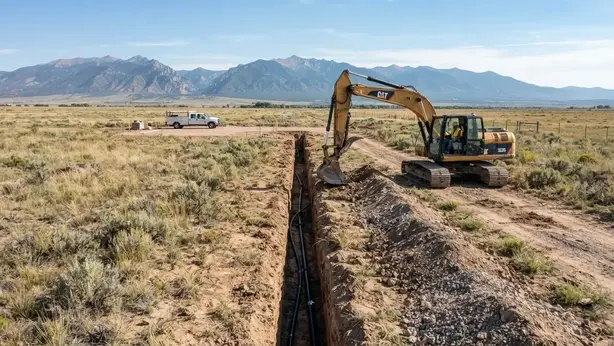
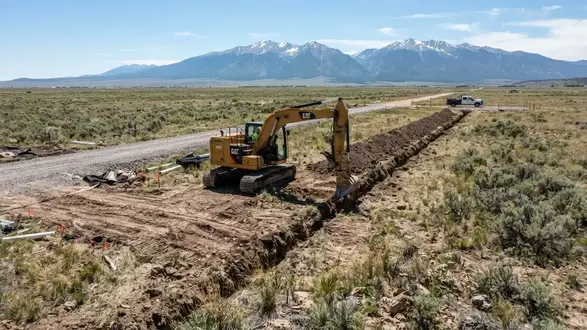
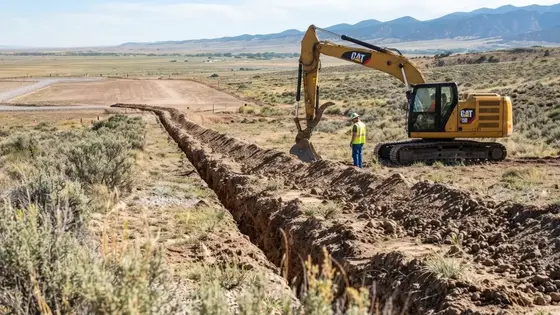
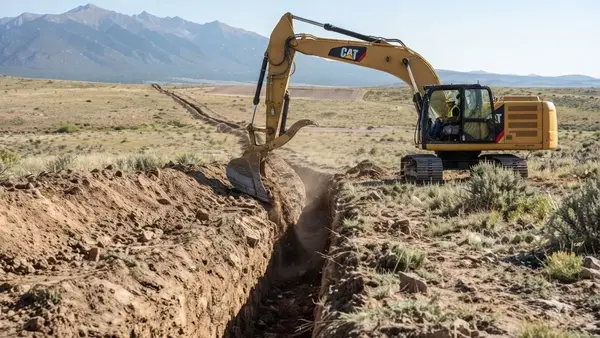
Utility trench being excavated across a rural Costilla County property for underground infrastructure

Rural utility trenching can connect a future homesite with electrical, water, communications, septic related infrastructure, and other underground systems.

Before You Dig: Planning a Utility Trench on Costilla County Land

Utility trenching on rural land should start with the property layout, not the excavator bucket. Before digging begins, the proposed route should be considered alongside the utility source, future building location, driveway access, well, septic system, existing improvements, and any underground infrastructure already serving the property.

This is especially important when developing undeveloped acreage. A trench that looks convenient from the property entrance may become an obstacle when a house pad, driveway, workshop, septic area, or additional building is established later. Planning the underground routes early gives the property owner an opportunity to think about the entire development rather than solving each utility connection separately.

Identify the Utility Source

Start by identifying where the utility will originate. Electrical service, a private well, water storage system, communications connection, septic component, solar equipment, or another infrastructure point can each create a different starting point for the trench. The source should be established before determining the most practical route across the property.

Identify the Destination

The destination matters just as much as the utility source. A future home, cabin, workshop, garage, outbuilding, water system, septic component, or other improvement should have a reasonably defined location before permanent underground routes are excavated. Moving a utility connection later can require additional excavation and site restoration.

Plan the Utility Route

The proposed trench should be evaluated as a route across the actual property rather than simply as the shortest distance between two points. Existing improvements, future construction, access, utility connections, property layout, and other planned infrastructure can all affect where an underground route makes practical sense.

Review the Driveway & Access

Utility routes may need to cross an existing driveway, private road, construction entrance, or future access route. Reviewing these areas before trenching helps coordinate excavation with property access. If the entrance or driveway still needs improvement, review our driveway and road grading services and gravel delivery options when planning the construction sequence. This can help reduce the possibility of installing a utility through an area that will later require substantial road or driveway work.

Establish the Future Homesite

A future house or cabin location can influence nearly every major utility route on an undeveloped property. Establishing the intended building area early allows electrical, water, communications, septic, and other underground infrastructure to be considered together rather than added independently after construction has already begun.

Account for the Well & Water System

Rural properties using a private well may require underground water lines connecting the well or related equipment to a home, cabin, storage system, pressure equipment, or other point of use. The well location and intended water system layout should therefore be considered when planning the trench route.

Account for Septic Infrastructure

Septic systems can involve underground piping and multiple system components. Utility routes should be considered alongside the proposed septic layout and building location. Our septic installation and site preparation information explains why wastewater infrastructure needs to be coordinated with other underground systems before excavation begins.

Identify Existing Underground Utilities

Existing underground infrastructure should be identified before excavation begins. Rural properties may have utility lines or other buried infrastructure associated with existing buildings, improvements, wells, septic systems, or previous development. Known underground facilities should be considered when establishing the proposed trench route.

Address Colorado 811 Requirements

Before excavation, the applicable Colorado 811 notification and utility-locating process should be addressed so participating underground utility facilities can be located and marked as applicable to the project. Property owners should also understand that privately owned underground facilities may require additional identification beyond the standard locate process.

Consider Drainage & Site Features

Utility routes should be considered in relation to the rest of the property. Drainage features, existing improvements, access routes, planned grading, building areas, and other site features can affect where underground infrastructure can reasonably be installed. The trench should fit the broader site plan rather than being treated as an isolated excavation.

Plan Equipment Access

Excavation equipment needs a workable route to reach the proposed trench. Long rural driveways, undeveloped entrances, existing structures, narrow access points, and the location of the utility corridor can all affect how equipment reaches the work area. Access should be considered before the excavation sequence is established.

Consider Driveway & Road Crossings

A utility trench may need to cross an existing or planned driveway or private road. These crossings should be identified during planning so excavation, utility installation, backfilling, access, and surface restoration can be coordinated instead of treating the crossing as an unexpected problem during construction.

Plan for Off-Grid Infrastructure

Off-grid properties can require underground routes associated with solar equipment, battery systems, buildings, water systems, communications, and other infrastructure. Considering these connections together can help establish practical utility corridors before individual components are installed.

Think Beyond the First Building

Rural property development may eventually include more than one structure. A workshop, garage, barn, cabin, storage building, guest structure, or other improvement may be added after the primary home is established. Considering reasonable future development can help avoid placing permanent utility routes directly through areas likely to be developed later.

Review Previous Property Improvements

Existing driveways, buildings, wells, septic components, utility connections, fencing, and other improvements can provide important context when planning new underground work. Understanding what has already been developed on the parcel can help identify potential conflicts before excavation begins.

Understand the Costilla County Parcel

Property owners can review available Costilla County Planning & Zoning resources when researching land use, mapping, road, subdivision, zoning, and other development information that may be relevant to a rural property project. County resources can provide useful planning background, but they do not replace field verification, utility locating, surveying, or project specific requirements.

Estimate the Utility Run

The approximate length of the proposed utility route should be considered before estimating excavation costs. A short connection near an existing structure can have a very different scope from a long rural utility corridor extending across undeveloped acreage to a remote homesite or outbuilding.

Coordinate the Construction Sequence

Utility trenching should be considered as part of the larger construction sequence when a property also needs grading, driveway work, excavation, a house pad, well related work, septic installation, solar installation, or other site improvements. Coordinating the work can help reduce situations where completed work must later be excavated, crossed, or rebuilt.

The Shortest Route Is Not Automatically the Best Route

A straight line between a utility source and destination may appear to be the simplest option, but rural property development involves more than the distance between two points. The proposed route should be considered alongside driveways, future building areas, wells, septic infrastructure, existing improvements, access routes, and other underground systems.

Before excavation, property owners should also review applicable county resources and address the utility-locating process. The Costilla County Planning & Zoning resources can provide useful local planning information, while Colorado 811 provides the utility-locating process for participating underground utility facilities. Privately owned underground facilities may require additional identification, so property owners should consider the complete underground picture before excavation.

For a rural property that will eventually include a home, cabin, workshop, well, septic system, driveway, solar equipment, or other improvements, utility trenching is best viewed as one part of the overall land development plan. Establishing practical routes before major site work begins can help reduce conflicts and unnecessary excavation as the property develops.

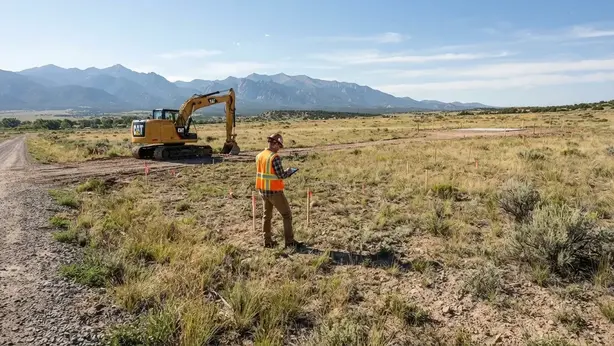
Rural utility corridor being planned across undeveloped property before underground trench excavation

Utility routes should be planned around the future homesite, driveway, existing improvements, access, and other underground infrastructure before excavation begins.

Planning a Utility Route for Rural Acreage?

If you are determining where a utility trench should cross your Costilla County property, the route may need to account for the future homesite, driveway, well, septic area, existing improvements, drainage, equipment access, and potential future buildings. We can discuss the proposed utility corridor and the excavation work needed to connect the planned areas of the property.

Call (719) 695-7224

Researching a Costilla County Property Before Utility Excavation

If you are evaluating undeveloped acreage before purchasing, our Costilla County land buying guide provides additional context for researching rural property and considering development feasibility before committing to a homesite.

Rural utility planning starts with understanding the parcel itself. Before choosing a trench route, property owners can review available parcel, plat, zoning, road, and property information to better understand how the proposed underground infrastructure fits the land.

Costilla County Planning & Zoning provides county planning and mapping resources that can include road and subdivision maps, zoning information, township and range maps, and plat resources. The Costilla County Assessor also maintains property information that can provide useful background about a parcel, including land size, location, maps, improvements, and property history where available. These resources can help with rural site development planning, but a map or property record should not be treated as a substitute for a field survey, utility locate, or project specific verification.

  • Parcel Information:
    Confirm the property being developed and review available parcel and property information before planning major underground improvements. Knowing the parcel layout provides a useful starting point for considering utility sources, destinations, access, and future improvements.
  • Road & Access Information:
    Review the relationship between the parcel, public roads, private access, driveways, and the proposed utility route. A utility corridor may need to begin near a property entrance or cross an existing access route before reaching a future homesite.
  • Plat & Subdivision Information:
    Where applicable, recorded plats and subdivision information can provide useful context for understanding how a property was originally laid out. These records can be helpful when considering parcel boundaries, access, and the relationship between the property and surrounding development.
  • Zoning & land use Information:
    Planning information can help property owners understand the land use context before committing to a development layout. Utility planning should be considered alongside the intended use of the property and any applicable requirements that may affect the proposed improvements.
  • Existing Improvements & Property History:
    Available property information may provide useful background about previous improvements, existing structures, and changes to the parcel. This information can help establish questions to investigate before excavation, although property records should not be assumed to document every underground utility or buried facility.
  • Field Verification:
    Maps and county records are planning tools rather than excavation clearance. Actual utility locations, property boundaries, site conditions, and other physical features should be verified through the appropriate professional or official process before excavation begins.

A Parcel Map Is a Starting Point, Not a Digging Plan

A parcel map can help you understand a property on paper, but it does not show every underground facility and should not be treated as a legal survey or excavation clearance. County records can provide useful planning context, but the final trench route should be based on the actual development plan, field conditions, applicable utility-locating procedures, and the requirements of the utility being installed.

For rural Costilla County property, this preliminary research can be particularly useful when several improvements are being planned at the same time. A future homesite, driveway, well, septic system, workshop, utility connection, or off grid development project may each influence where underground infrastructure should ultimately travel. Reviewing the parcel before excavation gives the property owner a better opportunity to identify those relationships before construction begins.

Utility Planning for a Future Homesite in Costilla County

A rural homesite may eventually need several underground systems working together. Electrical service, water from a well, septic infrastructure, communications, driveway access, drainage, solar equipment, and connections to future buildings should be considered before permanent utility corridors are excavated. Planning these relationships early can help keep underground infrastructure compatible with the larger property development plan.

1. Establish the Future Homesite

Identify the intended area for the future home, cabin, or primary building before finalizing major underground routes whenever the project allows. The building location becomes the destination for several utility connections and can influence where those routes approach the property.

2. Plan the Driveway & Property Access

Determine how vehicles, construction equipment, material deliveries, and future occupants will reach the homesite. The driveway or private access route may influence where utilities enter the property and may also create areas where underground infrastructure needs to cross or coordinate with future access improvements.

3. Coordinate the Well & Water System

If the property will use a private well, consider the relationship between the well location, water system components, homesite, and underground water route. Planning these elements together can help establish a practical connection between the water source and the future building without treating the water line as an afterthought. Learn more about private well drilling for rural Costilla County property.

4. Plan Around the Septic System

Septic infrastructure should be considered alongside the future building location and other underground utilities. The septic area, building connection, driveway, water system, and utility corridors all form part of the larger homesite layout and should be coordinated before permanent trench routes are established.

5. Plan Electrical & Communications Routes

Electrical service, communications conduit, internet infrastructure, and other building connections may need underground routes between a property entrance, service point, and future structure. Establishing these routes as part of the homesite plan can help reduce conflicts with driveways, buildings, septic infrastructure, and other planned improvements.

6. Coordinate Off-Grid Infrastructure

An off grid homesite may include solar equipment, battery systems, water infrastructure, communications, and other utility components. Considering these systems before trenching can help establish underground routes that work with the property's broader development plan. See our off grid solar installation information and off grid land preparation services for related property development considerations.

7. Consider Future Buildings & Improvements

A rural property may eventually include a workshop, garage, barn, cabin, storage building, agricultural structure, or other improvement. Considering likely future development can help prevent permanent utility routes from being placed directly through areas that may later require additional construction.

Plan the Homesite Before Permanent Utility Routes

A utility trench may be installed correctly and still create a problem if the surrounding property layout changes afterward. A future driveway, house pad, well, septic area, workshop, garage, or other improvement may require excavation in an area where a utility route has already been established. Considering the homesite as a complete development plan can help reduce unnecessary conflicts and repeated disturbance.

This does not mean every future improvement needs to be designed in detail before the first trench is excavated. It means the major relationships should be considered early enough that electrical, water, communications, septic related infrastructure, access, and off-grid systems can be coordinated with the intended use of the property. For rural Costilla County acreage, utility trenching is often one phase of a larger homesite development process rather than an isolated excavation project.

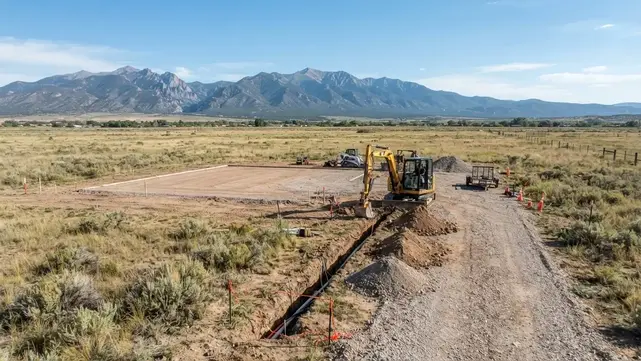
Rural future homesite with coordinated utility trenching, driveway access, and site development work

A future rural homesite may require coordinated planning for utility routes, water, septic infrastructure, access, power, and other site improvements.

Developing a Rural Homesite With Multiple Utility Connections?

If your Costilla County homesite will require electrical service, water lines, communications, septic related excavation, solar infrastructure, driveway access, or connections to future buildings, utility trenching can be coordinated with the broader site development sequence. We can discuss the excavation, access, crossings, backfill, and restoration work needed as the property moves from undeveloped acreage toward a usable homesite.

Call (719) 695-7224

Where Utility Trenching Fits Into Rural Land Development

Utility trenching is often one phase of a larger rural construction project. The exact sequence depends on what already exists on the property, which utilities are being installed, how the homesite will be developed, and what other site work is planned. Access, grading, house pads, wells, septic systems, utilities, and buildings should be considered as connected parts of the overall development plan.

1. Review the Property

Establish the parcel layout, existing improvements, property access, proposed homesite, utility source, future buildings, and other development needs. Reviewing the property first helps establish where underground infrastructure may need to travel and what areas should remain available for future construction.

2. Plan the Infrastructure

Coordinate the driveway, house pad, well, septic area, electrical service, communications, water lines, off-grid systems, and other underground routes. The goal is to understand how the major infrastructure components interact before individual excavation routes are finalized.

3. Establish Practical Access

Where necessary, make sure excavation equipment, trucks, material deliveries, and other construction vehicles can reach the proposed work areas. Existing or planned driveways and private roads may need to be considered before trenching, particularly where utility routes approach or cross property access.

4. Complete the Planned Excavation

Utility corridors can then be excavated according to the project plan and the applicable requirements for the utility being installed. The trenching scope may vary based on route length, utility type, access, existing improvements, crossings, and the conditions encountered on the property.

5. Coordinate Utility Installation

The applicable utility installer or qualified trade contractor handles the utility system, connections, inspections, testing, equipment, and other specialized installation requirements within their scope. Trenching should be coordinated with that installation plan so the excavation supports the intended utility system.

6. Backfill & Restore the Trench

Once the applicable utility installation requirements have been satisfied, the excavation can be addressed through backfill and surface restoration as appropriate for the project. Restoration may need to account for driveways, roads, building areas, landscaped areas, or other surfaces affected by the trench.

7. Continue Site Development

Additional work may include grading, driveway improvements, gravel placement, drainage related work, house pad preparation, additional excavation, or other site improvements. The timing of these phases varies by project, so utility routes should be coordinated with the work that will follow them.

8. Build & Develop in Phases

Rural property development may continue in stages as a home, cabin, workshop, garage, agricultural structure, off-grid system, or other improvement is added. A utility plan that accounts for reasonably foreseeable future development can help reduce unnecessary disturbance when later phases begin.

Rural Projects Are Often Built in Stages

A rural property may begin with access and basic site preparation, followed by a homesite, well, septic system, utility connections, and eventually a home or cabin. Another property may already have a driveway, building, or utility connection and only need a new underground route for a specific improvement. There is no single construction sequence that applies to every Costilla County property.

What matters is coordinating the trenching with the work that surrounds it. A utility route may need to account for grading, driveway construction, a house pad, well and septic work, drainage, existing improvements, and future buildings. Thinking through those relationships before excavation can help reduce situations where completed work has to be reopened or disturbed during the next stage of development.

Utility Trenching Across Driveways, Private Roads & Developed Areas

Rural utility routes do not always stay on undeveloped ground. A new electrical, water, communications, or other underground connection may need to cross an existing driveway, private road, access lane, parking area, or previously improved portion of the property. These crossings should be considered as part of the utility route before excavation begins.

A crossing affects more than the trench itself. Excavation can temporarily change how vehicles reach the property, while the completed work may need appropriate backfill and surface restoration for the area to return to normal use. The approach depends on the existing surface, utility being installed, trench requirements, equipment access, restoration expectations, and the overall construction sequence.

Existing Gravel Driveways

A trench crossing a gravel driveway may require excavation, utility installation, backfill, compaction, and restoration of the affected access surface. The crossing should also be considered in relation to the driveway's future use and any additional grading or gravel work planned for the property.

Private Roads & Long Access Routes

Longer rural access roads can create additional planning considerations when underground utilities need to reach a homesite farther into the property. The utility route, road alignment, equipment access, and restoration requirements should be considered together rather than treating the crossing as an isolated excavation.

Maintaining Construction Access

Excavation equipment, material deliveries, contractors, and property owners may still need access while trenching is underway. Where a proposed trench affects the primary access route, the construction sequence should account for how vehicles will continue reaching the work area and the property.

Existing Buildings & Improvements

Utility routes around homes, cabins, workshops, garages, sheds, and other structures may require more careful planning than an open area. Existing improvements can affect equipment access, route alignment, connection points, and the amount of surface disturbance created by the excavation.

Parking & Improved Areas

A utility trench may also cross parking areas, prepared building areas, previously graded ground, or other improved portions of a rural property. These areas should be identified before excavation so the restoration scope and future use of the surface can be considered.

Future Improvements

A crossing that works for today's property layout may become a problem if a driveway is expanded or another building, garage, workshop, parking area, or other improvement is added later. The proposed route should be considered against reasonably foreseeable future development.

Utility Route Alignment

The shortest route across a driveway or developed area is not automatically the most practical route. The utility source, destination, existing improvements, access, future development, and other underground infrastructure can all influence where the trench should travel.

Backfill & Surface Restoration

Once the applicable utility installation requirements have been satisfied, the excavated area may need backfill and surface restoration appropriate to the project. Driveways, private roads, parking areas, and other finished surfaces may have different restoration considerations than undeveloped ground.

A Utility Crossing Is Also an Access Planning Problem

When a utility trench crosses a driveway or private road, the project affects two systems at once: the underground infrastructure being installed and the surface that people and equipment use to reach the property. Planning only the trench can overlook how excavation, installation, backfill, and restoration affect day to day access during construction.

This becomes particularly important when a rural property is being developed in phases. A driveway may already be in use while a future home, well, septic system, workshop, or other improvement is still being planned. Coordinating the utility route with those improvements can help reduce unnecessary crossings, repeated excavation, and disturbance to areas that have already been prepared for use.

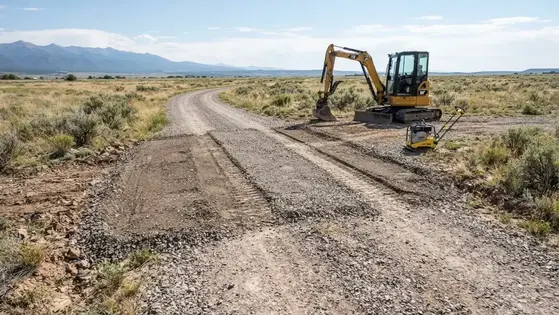
Utility trench crossing a rural gravel driveway during underground utility excavation in Costilla County

Utility trenches may cross gravel driveways and private access routes, making excavation, access, backfill, and surface restoration part of the same construction plan.

Need to Run a Utility Trench Across a Gravel Driveway?

If an underground utility needs to cross an existing driveway, private road, or rural access route in Costilla County, the excavation needs to be coordinated with property access and the condition of the finished surface. We can discuss the trench route, equipment access, excavation scope, backfill, and restoration needed to return the crossing to practical use.

Call (719) 695-7224

Utility Trench Route & Site Conditions in Costilla County

The difficulty of rural utility trenching depends on more than the distance between two points. Ground conditions, access, existing improvements, vegetation, surface materials, slopes, drainage, crossings, and the location of other infrastructure can all affect how an underground utility route is planned, excavated, backfilled, and restored.

On undeveloped Costilla County acreage, a proposed utility trench may cross open ground, an existing gravel driveway, a private access road, previously disturbed areas, or portions of the property that will eventually become part of a homesite, cabin site, workshop, or other improvement. Conditions can also vary from one part of a parcel to another, so information from a parcel map or soil-resource database should be treated as planning information rather than a substitute for evaluating the actual excavation area.

Before trenching begins, it is useful to consider the complete route from the utility source to the intended point of connection. That may include the property entrance, driveway, private road, homesite, well, septic area, electrical service, communications route, solar equipment, existing buildings, and future improvements. Reviewing those relationships early can help identify access conflicts, surface restoration requirements, and potential locations where the trench could interfere with later construction.

Existing Driveways & Private Roads

Trenching across an existing gravel driveway, private road, access lane, or parking area can require excavation and subsequent restoration while maintaining practical property access during the project. The surface, traffic demands, trench location, and planned restoration should all be considered before work begins.

Soil & Subsurface Conditions

Soil and subsurface conditions can vary between properties and even between different portions of the same parcel. Soil-survey information can provide useful planning context, but actual excavation conditions may depend on the specific trench location, previous disturbance, fill, rock, moisture, and other site conditions encountered during the project.

Vegetation & Surface Obstacles

Brush, trees, stumps, roots, debris, fences, structures, and other surface obstacles can affect the practical alignment of a rural utility corridor. Where clearing is required, vegetation removal may need to be coordinated with the trench route, equipment access, and future site improvements.

Slopes & Elevation Changes

Changes in elevation can affect equipment access, trench alignment, surface drainage, and how the underground route fits into the larger property development plan. The appropriate approach depends on the actual site layout and the requirements of the utility being installed. Where the surrounding terrain needs to be adjusted, land grading and leveling can be evaluated alongside the proposed utility corridor and drainage plan.

Limited Working Space

Narrow approaches, existing buildings, fences, property boundaries, steep areas, parked equipment, and other physical constraints can limit where excavation equipment can safely or practically operate. These conditions can be especially important around existing homes, cabins, workshops, garages, and developed portions of rural property.

Previously Disturbed Ground

Existing trenches, fill areas, driveway construction, old building sites, utility corridors, and other disturbed portions of a property may differ from surrounding ground. Known previous work should be considered when planning a new underground route, particularly where older infrastructure or undocumented improvements may be present.

Drainage & Surface Water

Runoff patterns, drainage paths, low areas, ponding, seasonal water conditions, and existing ditches or drainage features can affect how a trench route fits the property. The trench should also be considered alongside the property's broader grading and drainage plan so that underground work does not unnecessarily conflict with future site improvements.

Excavator & Equipment Access

Excavators, support equipment, trucks, material deliveries, and other construction vehicles need a practical way to reach the trench. Long rural driveways, gates, narrow entrances, private roads, and undeveloped acreage can make equipment access an important part of utility excavation planning.

Homesite & Building Conflicts

A utility trench should be considered in relation to the intended building area. A route that works for a vacant parcel may become a conflict once a house, cabin, garage, workshop, barn, driveway, or additional outbuilding is constructed.

Existing & Planned Infrastructure

Utility planning may need to account for electrical service, water lines, wells, septic related infrastructure, communications conduit, solar equipment, drainage features, and other underground or surface improvements. New excavation should be coordinated with known infrastructure and the applicable utility-locating and installation requirements before digging.

Soil Maps Help With Planning, But They Do Not Replace Site Evaluation

USDA soil-survey information can be useful when researching rural land before development, including information about mapped soil properties, drainage, slope, flooding or ponding potential, and other characteristics. However, mapped soil information is not a guarantee of the exact conditions that will be encountered at a particular trench location. Actual excavation conditions can vary within a property and should be considered along with the proposed route and field conditions.

Property owners can also review available Costilla County parcel, planning, plat, road, and land use information when developing a site plan. Those records can help establish the relationship between the parcel, access, existing improvements, and proposed development, but they should not be treated as a utility locate, legal boundary survey, engineering plan, or excavation clearance.

The Trench Is Part of the Property, Not an Isolated Line

A utility route may look simple on a parcel map but become more involved once actual access, surface conditions, existing improvements, drainage, vegetation, and the future development layout are considered. Looking at the entire route before excavation can help identify potential conflicts before equipment arrives on the property.

For rural Costilla County properties, this is particularly important when utility trenching is part of a larger homesite, cabin, workshop, garage, driveway, well, septic, solar, or off-grid land development project. Planning the underground route together with the rest of the property can help reduce unnecessary disturbance and avoid creating conflicts with improvements that are planned for a later phase.

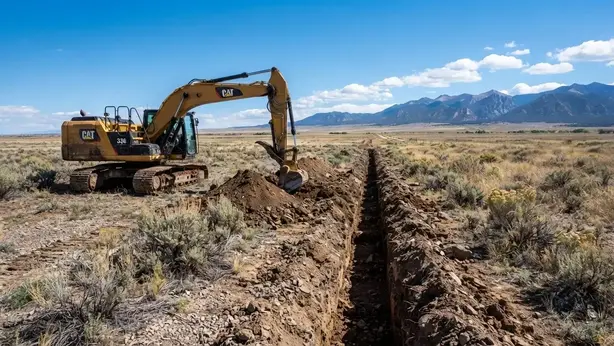
Tracked excavator installing a utility trench across varied rural ground in Costilla County

Utility trenching must account for the actual route, ground conditions, equipment access, existing improvements, drainage, and surrounding site development.

Utility Trench Depth, Width & Excavation Considerations in Costilla County

Utility trench dimensions depend on what is being installed, how the system will be constructed, where the trench is located, and which requirements apply to the project. Electrical service, water lines, communications conduit, septic related infrastructure, and off-grid utility routes can have different excavation and installation considerations.

There is no single trench depth or width that applies to every rural utility project. Required dimensions can depend on the utility system, installation method, conduit or pipe, applicable codes or standards, utility-provider requirements, site conditions, and the responsibilities of the contractor or qualified professional handling the installation. The excavation should therefore be planned around the actual utility being installed rather than using a generic measurement for every trench.

Trench dimensions also need to be considered in relation to the Costilla County property itself. A utility route across undeveloped acreage may present different excavation considerations than a trench crossing a gravel driveway, private road, existing homesite, previously disturbed ground, or area containing other underground infrastructure. The proposed route, utility requirements, equipment access, and final restoration should be considered together before excavation begins.

  • Trench Depth:
    Required depth depends on the utility being installed, installation method, location, applicable codes or standards, and requirements established by the utility provider, system designer, installer, or other responsible professional. A universal burial depth should not be assumed for every underground utility.
  • Trench Width:
    Excavation width can depend on the size and type of the utility, conduit or pipe, required working space, equipment, soil conditions, trench configuration, and the installation procedure being used.
  • Utility Separation:
    When multiple underground utilities are planned on the same property, their routes and required separation should be coordinated according to the applicable requirements for each system. Electrical, water, communications, septic related, and other utilities should not be assumed to share one trench configuration without confirming the applicable requirements.
  • Bedding, Cover & Backfill:
    Depending on the utility, installation may involve specified bedding, cover, protective materials, conduit, pipe support, backfill material, compaction, warning systems, or other installation details. These requirements should be established as part of the utility installation plan.
  • Electrical Utility Trenching:
    Electrical service routes can have specific requirements for burial, conduit, conductors, protection, crossings, service connections, and installation. The applicable utility provider and qualified electrical professional should establish the requirements for the particular project.
  • Water Line Trenching:
    Water system trenches can have different considerations from electrical or communications routes. The water source, point of use, pipe system, installation method, site conditions, and applicable requirements should be considered before excavation begins.
  • Communications & Internet Conduit:
    Communications and low voltage infrastructure may require underground conduit or other buried pathways between a service point and building. The applicable system requirements should be established before the trench dimensions and route are finalized.
  • Septic Related Trenching:
    Underground connections associated with septic systems can have their own design, installation, separation, inspection, and approval requirements. Excavation should be coordinated with the applicable septic system plan and the requirements for septic system installation in Costilla County rather than treated as a generic utility trench.
  • Off Grid & Solar Utility Routes:
    Rural off grid properties may require underground routes associated with solar equipment, battery systems, electrical distribution, water infrastructure, buildings, or other components. The trench plan should account for the complete off grid development layout.
  • Driveway & Private Road Crossings:
    A trench crossing an existing gravel driveway, private road, or access route may require additional planning for excavation, utility installation, backfill, compaction, maintaining access, and surface restoration.
  • Existing Underground Infrastructure:
    Known electrical lines, water lines, communications facilities, irrigation infrastructure, septic components, and other underground improvements should be considered before excavation. Applicable utility locating and verification procedures should be completed before digging.
  • Excavation Safety:
    Trench safety considerations depend on the actual excavation, including depth, soil conditions, water, nearby structures, equipment, and other site factors. Applicable excavation-safety requirements should be followed for the conditions encountered rather than relying on a generic trench configuration.
  • Multiple Utilities on One Property:
    Rural homesites may eventually require electrical service, water, communications, septic related connections, solar infrastructure, and additional utility routes. Coordinating these systems early can help reduce unnecessary excavation and conflicts with future improvements.
  • Future Homesite Connections:
    Utility trenches serving a future home, cabin, workshop, garage, or other building should be considered alongside the intended building location, driveway, well, septic system, and other site improvements.

There Is No Single "Standard Utility Trench"

A water line trench is not necessarily excavated to the same specifications as an electrical trench, communications conduit, septic related connection, or off-grid power route. Depth, width, separation, bedding, protective measures, backfill, and other installation details should be based on the actual utility system and the requirements applicable to that project.

This is why a utility trenching estimate should identify what is being installed, where the route begins and ends, whether the trench crosses an existing driveway or private road, what other infrastructure is nearby, and which utility provider, installer, designer, or qualified professional is responsible for the system requirements.

Confirm Utility Requirements Before Excavation

Before excavation begins, the proposed trench should be reviewed against the requirements of the utility being installed and the conditions of the actual property. Required utility locating, permits, inspections, design requirements, and installation specifications should be confirmed with the appropriate utility provider, permitting authority, qualified installer, or other responsible professional.

For rural Costilla County property, this planning step is particularly useful when a utility trench is part of a larger development involving a driveway, house pad, well, septic system, workshop, cabin, solar equipment, or off-grid infrastructure. Coordinating the underground routes before excavation can help reduce unnecessary rework as the property develops in phases.

Rural utility trench being excavated beside a tracked excavator on undeveloped Costilla County property

Utility trench dimensions depend on the utility being installed, site conditions, required working space, and the excavation method used for the project.

Need a Rural Utility Trench Excavated?

If your Costilla County property needs excavation for an electrical, water, communications, off-grid, or other underground utility route, the trenching scope should be based on the actual utility plan, route length, property conditions, access, and surrounding improvements. We can discuss the proposed trench and the excavation work needed to prepare the route for the applicable utility installation.

Call (719) 695-7224

Utility Trench Backfill, Compaction & Surface Restoration

Excavating the trench is only one part of completing underground utility work. After the applicable utility installation requirements are satisfied, the disturbed excavation area may also need appropriate backfill, compaction, grading, and restoration based on its location and intended use.

Restoration can be particularly important on rural Costilla County properties when a trench crosses a gravel driveway, private road, construction access route, homesite, parking area, or other previously improved surface. The finished condition should be considered when the trench is planned rather than treating restoration as an afterthought.

Appropriate Backfill

Backfill should be appropriate for the utility installation and the surrounding site, with placement coordinated to the project's applicable requirements.

Compaction

Disturbed areas beneath driveways, roads, parking areas, or other improved surfaces may require proper compaction to help limit later settlement.

Gravel Driveway Restoration

Trenching across a gravel driveway may require reshaping and restoring the affected surface so the property can return to practical access.

Private Road Restoration

Longer private roads may require restoration across the disturbed trench corridor while keeping the access route practical for use.

Drainage Considerations

Restored grades should work with surrounding drainage rather than creating unintended low points, berms, or other surface obstructions.

Homesite Restoration

Future building areas should be restored with the planned final grades, building area, driveway, and other site improvements in mind.

Plan the Finished Surface Before Opening the Ground

A trench can be technically complete while the property still needs surface restoration. Planning how the disturbed area will be returned to useful condition is especially important where underground work crosses an existing driveway, private road, access route, or developed portion of the property.

Rural gravel driveway being restored after underground utility trenching in Costilla County

Utility trench restoration can include appropriate backfill, compaction, grading, and reconstruction of disturbed gravel driveways or private access routes.

Utility Trenching Around Wells & Septic Systems in Costilla County

Rural utility planning often involves more than one underground system. When a property uses a private well and onsite wastewater system, utility routes should be considered together with the planned well location, septic area, building site, driveway, and other infrastructure.

This is particularly important on undeveloped acreage where the homesite and supporting infrastructure are being established for the first time. Electrical service, water lines, septic related connections, communications, solar equipment, and other utilities may all need to reach the same general development area without creating unnecessary conflicts.

  • Well Location:
    Account for the planned or existing well when routing water lines, electrical service, controls, and other related infrastructure.
  • Septic Area:
    Include the septic system and associated areas in the overall property layout before unrelated utility routes are finalized.
  • Building Location:
    Coordinate utility routes with the future home, cabin, workshop, or other structure and its planned connection points.
  • Driveway & Access:
    Coordinate underground routes with the driveway and equipment access needed to construct and maintain the property.
  • Off-Grid Infrastructure:
    Account for solar equipment, batteries, pumps, water systems, and other off-grid components that may require underground connections.
  • Clearances & Approvals:
    Confirm applicable setbacks, separation requirements, permits, inspections, and other requirements with the responsible authority, utility provider, designer, or installer.

Coordinate the Underground Systems as One Property Plan

A rural property can contain several separate underground systems that ultimately serve the same homesite. Coordinating their locations early can reduce unnecessary conflicts and help keep future excavation from interfering with wells, septic infrastructure, driveways, buildings, and other improvements.

Rural utility trench serving a developing homesite with coordinated well, septic, driveway, and underground infrastructure

Rural utility routes should be considered alongside the future building site, driveway, well, septic area, and other planned property infrastructure.

Developing a Homesite With Multiple Underground Utilities?

A rural Costilla County homesite may require coordinated excavation for water, electrical service, communications, septic related connections, off grid systems, and other infrastructure. If several improvements are being developed together, we can discuss how the utility trenching, equipment access, driveway crossings, and site restoration fit into the broader construction sequence.

Call (719) 695-7224

Utility Locates, Permits & Project Responsibilities in Costilla County

Utility trenching involves more than moving soil. Before excavation, property owners and contractors should determine which locating, permitting, utility-provider, inspection, design, and installation requirements apply to the specific project.

Requirements can differ depending on whether the work involves electrical service, water, communications, septic infrastructure, a well, solar, or another underground system. The excavation contractor may be responsible for trenching while a utility provider, licensed contractor, designer, engineer, or other qualified party handles separate portions of the project.

Utility Locates

Existing underground utilities should be addressed through the applicable locating process before excavation begins. Do not rely solely on parcel maps, property records, or assumptions about underground utility locations.

Permits

Determine whether the planned work requires permits or approvals from Costilla County, a utility provider, the State of Colorado, or another applicable authority before construction begins.

Utility Provider Requirements

Electrical and other utility connections can have provider-specific requirements for service locations, installation methods, inspections, equipment, or final connections.

Inspections & Approvals

Some projects may require inspections, testing, documentation, or other approvals before the completed system can be connected or placed into service.

Qualified Installers

Certain electrical, septic, well, plumbing, solar, or other work may require qualified or licensed professionals depending on the project and applicable requirements.

Excavation Scope

Establish which portions involve excavation, trench preparation, backfill, grading, and restoration and which portions belong to the utility installation itself.

Verify Requirements Before Breaking Ground

Colorado law requires excavators to contact Colorado 811 before excavation. Colorado 811 provides the notification process for locating public underground utility facilities, while privately owned utility lines may require a separate private locating service. Applicable utility providers and permitting authorities can also confirm requirements specific to the project.

Parcel maps, online property records, and information from previous owners can provide useful planning context, but they should not be treated as excavation clearance or as a substitute for required public and private utility locating procedures.

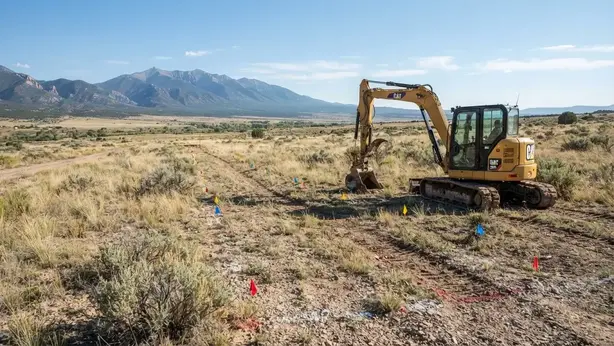
Utility excavation area marked before trenching on rural Costilla County property

Existing underground infrastructure should be addressed through the applicable locating process before excavation begins.

Rural Utility Trenching Scenarios Across Costilla County

Utility excavation can have a very different scope depending on the property and where it is in the development process. A parcel being prepared for a future homesite may need a very different trenching plan than an established property adding a workshop, connecting a well, or extending utilities to a new building.

Across Costilla County, rural properties can range from undeveloped acreage to partially improved land and established homesites. The important factors are the property's existing improvements, proposed utility source and destination, access, planned buildings, underground infrastructure, and the development work that still needs to be completed.

Undeveloped Rural Acreage

The owner may still be determining the homesite, driveway, well, septic area, electrical connection, and future buildings. Utility trenching in this situation benefits from early planning because the major routes can be considered before substantial site improvements are completed.

Future Home or Cabin

The primary building location may already be established while electrical, water, communications, septic related infrastructure, and access still need to be coordinated. Utility routes should fit the intended homesite rather than being planned independently from the building layout. Where the building area still needs to be prepared, house pad preparation can be coordinated with the planned utility connections.

Workshop or Garage

An established rural property may need new underground electrical, water, communications, or other connections to a separate structure. The route may need to work around an existing home, driveway, septic area, parking, or other improvements already on the property.

Well to Home Connection

A private water system may require an underground route between a well area, related equipment, storage system, residence, cabin, or other point of use. The water route should be considered alongside the homesite, driveway, septic infrastructure, and other underground systems. For new rural water sources, review our well drilling information and coordinate any required trench excavation with the broader site preparation plan

Septic Related Utility Routes

A rural development project may require underground connections associated with a septic system and the building it serves. These routes should be coordinated with the proposed septic layout, homesite, water system, driveway, and other infrastructure rather than treated as an isolated trench.

Off Grid Property

Off grid development may involve solar equipment, battery systems, water infrastructure, communications, buildings, and other components that need underground connections. Coordinating these routes early can help keep the utility infrastructure consistent with the property's overall development plan.

Long Rural Utility Runs

A homesite located farther from the property entrance may require longer utility runs and additional coordination between the utility route, driveway access, equipment movement, road crossings, and future development. Longer routes can also increase excavation and restoration scope.

Driveway & Road Crossings

A utility route may need to cross an existing gravel driveway, private road, access lane, or other developed area. The crossing should be considered alongside construction access, excavation, installation, backfill, surface restoration, and the property's continued use during the project.

Multiple Utilities on One Property

A rural homesite may need electrical, water, communications, septic related, and off grid infrastructure at the same time. Considering the major routes together can help identify potential conflicts and reduce the need to repeatedly excavate the same areas as individual systems are added.

Phased Rural Development

Some properties are improved gradually rather than all at once. A driveway and initial homesite may come first, followed later by a house, workshop, utility extension, or additional structure. Planning major underground routes with future phases in mind can help reduce unnecessary re-excavation and disturbance.

The Property Development Stage Matters

Utility trenching is rarely just about digging a trench. The same utility can have a very different excavation scope depending on whether it is being installed on undeveloped acreage, routed to a new homesite, extended to an existing workshop, connected to a well, or added as part of a larger off-grid development project.

For Costilla County property owners, the most useful starting point is to identify what the property has today, what is being built next, and what improvements may reasonably follow. That information can help determine the utility source, destination, route, access requirements, crossings, and relationship to the rest of the land development plan.

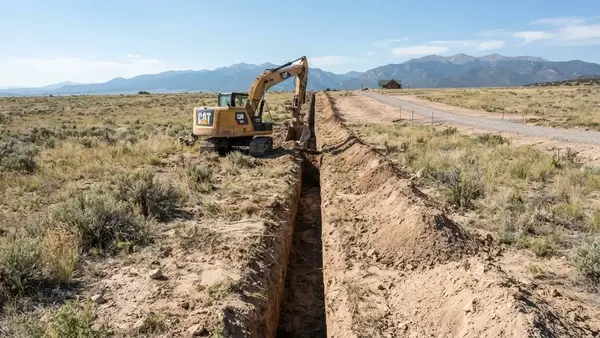
Long underground utility trench extending across rural Costilla County acreage toward a future homesite

Longer rural utility runs may cross undeveloped acreage to connect a remote homesite, building, well, or other property improvement.

Utility Trenching vs. Utility Installation

Excavating a utility trench and installing the utility itself are related but distinct parts of many rural construction projects. The excavation creates the physical pathway, while the applicable utility professional, installer, designer, or other qualified party may be responsible for the system installation, connections, testing, inspections, or approvals. On rural properties, this work may need to be coordinated with private well drilling, septic system installation, and off grid solar projects, along with electrical, water, and communications infrastructure.

Trenching & Excavation

Utility trenching can include establishing the planned excavation route, operating excavation equipment, working around site conditions, coordinating equipment access, and addressing applicable backfill or surface restoration work.

Electrical Installation

Electrical equipment, conductors, service connections, testing, and other electrical requirements are separate considerations from the excavation. The applicable electrical professional or utility provider may have requirements that affect how the trench is prepared and used.

Water System Installation

Pumps, water lines, pressure systems, connections, and other components depend on the particular water system design. The applicable installer or qualified professional determines the system requirements that the excavation needs to support.

Septic & Off Grid Systems

Septic systems and off grid properties can involve their own installation requirements, components, and approvals. Solar arrays, battery systems, water infrastructure, septic related connections, and other off grid components may also require underground routes, while the applicable system professional handles the installation within their scope.

Coordinate the Excavation With the Utility Installation

Trenching works best when the excavation plan is established around the requirements of the utility being installed. Before digging begins, the proposed route, utility type, connection points, equipment access, and other project conditions should be understood well enough for the excavation to support the intended installation. When underground infrastructure is part of a larger project, excavation and site preparation can help coordinate the trench with the property's other planned improvements.

The exact division of responsibilities can vary by project. Electrical, water, septic, communications, and off-grid solar systems may involve different installers, utility providers, designers, inspections, or other requirements. Confirming those responsibilities before excavation can help prevent a trench from being prepared in a way that does not match the eventual utility installation.

Rural utility trench being excavated across a Costilla County property for coordinated underground infrastructure

Rural utility trenching should be coordinated with the property's buildings, access routes, utility connections, and other planned infrastructure before excavation begins.

Already Have a Utility Installer or Provider Involved?

When another contractor or utility provider is handling the actual system installation, the trench still needs to support that work. We can discuss the excavation requirements, access, route, backfill, crossings, and restoration so the trenching portion is considered as part of the larger installation process.

Call (719) 695-7224

What to Have Ready for a Costilla County Utility Trenching Estimate

You do not need a finished engineering plan before starting a conversation about excavation. However, basic property and project information can make it much easier to understand the proposed trench route, access conditions, related site work, and likely project scope.

  • Property Location:
    Provide the Costilla County property location and the best available information for identifying the parcel and access point.
  • Utility Type:
    Explain whether the project involves electrical service, water, communications, septic related infrastructure, off-grid systems, or another underground connection.
  • Utility Source & Destination:
    Identify where the utility originates and where it needs to terminate, connect, or serve a building, system, or other improvement.
  • Approximate Trench Length:
    A rough distance helps distinguish a short building connection from a longer rural utility corridor.
  • Access Conditions:
    Mention driveways, gates, private roads, narrow approaches, crossings, or other conditions that could affect equipment access. If access needs improvement, review our driveway and road grading services and gravel delivery options when planning the work area and equipment route.
  • Existing & Planned Buildings:
    Identify homes, cabins, workshops, garages, outbuildings, and future structures that could affect the proposed route.
  • Well & Septic Information:
    Include known or planned well and septic locations when they are part of the property's development plan.
  • Known Underground Utilities:
    Identify any known existing underground utilities, previous utility routes, private systems, or other buried infrastructure that may affect the proposed excavation area.
  • Photos & Site Plans:
    Photos of the entrance, proposed route, driveway, building area, and existing improvements can provide useful project context.
  • Project Timing:
    Explain whether the trench is part of an immediate project, a future homesite, an ongoing property development phase, or a larger project that will be completed in stages.

A Rough Property Sketch Can Be Useful

A simple sketch can show the property entrance, existing buildings, proposed homesite, driveway, well, septic area, utility source, and approximate trench route. It does not need to be an engineering drawing to provide useful context for an initial excavation discussion.

The purpose is to make the intended development layout clear enough to identify questions that should be resolved before excavation. Final utility routing, installation requirements, locating procedures, inspections, and other project specific requirements should still be confirmed as applicable to the utility and property.

Rural utility route being planned across undeveloped Costilla County acreage for a future homesite

Rural utility routes are often planned around the future homesite, driveway, existing improvements, access conditions, and other infrastructure on the property.

Utility Trenching Projects for Rural Property Owners

Not every underground excavation project has the same purpose. A trench may connect an existing building, serve a future homesite, extend utilities across undeveloped acreage, cross a driveway, or become part of a larger off-grid land development project.

Electrical Utility Trenching

Underground excavation associated with electrical service routes serving homes, cabins, workshops, garages, and other rural property improvements.

Water Line Trenching

Excavated routes for water connections between wells, water system components, buildings, storage equipment, and other points of use.

Communications Conduit

Underground routes for communications, internet conduit, low-voltage systems, and related connections serving rural buildings and property improvements.

Septic Related Excavation

Excavation associated with portions of a septic project and underground connections between buildings, septic components, and related infrastructure.

Off-Grid Utility Routes

Underground routes associated with solar equipment, battery systems, water infrastructure, buildings, and other components of an off-grid property.

Long Rural Utility Runs

Extended excavation across rural acreage where a homesite, building, well, or other improvement is located away from the property entrance or an existing utility connection.

Long utility trench extending across undeveloped rural acreage in Costilla County, Colorado

Long rural utility runs can extend across undeveloped acreage to connect a property entrance, well, building site, or other future improvement.

Utility Trenching Costs in Costilla County, Colorado

Utility trenching costs in Costilla County vary by trench length, utility type, excavation conditions, equipment access, existing improvements, connection points, and restoration requirements. A short connection to an existing building can have a very different scope from a long utility route serving a remote rural homesite.

The ranges below are general project planning estimates, not fixed quotes. Electrical, water, communications, septic related, and off-grid utility projects can have different excavation requirements, and the final scope depends on the actual property and proposed utility route.

Common Utility Trenching Project Investment Ranges

Short Utility Connections

$1,500 to $5,000+

Short routes serving an existing home, cabin, outbuilding, water system, or nearby utility connection.

Medium Utility Runs

$3,000 to $10,000+

Longer routes connecting homes, cabins, workshops, garages, wells, septic infrastructure, or multiple connection points.

Electrical Trenching

$3,000 to $10,000+

Underground routes between electrical service points and homes, cabins, workshops, garages, or other improvements.

Water & Well Trenching

$3,000 to $12,000+

Water line routes connecting wells, storage systems, pressure systems, homes, cabins, or other points of use.

Long Rural Utility Routes

$5,000 to $20,000+

Extended trenching across rural acreage for remote homesites, buildings, wells, utilities, and future property development.

Multi-Utility & Off-Grid

$10,000 to $30,000+

Larger projects involving multiple underground routes for power, water, communications, solar and battery systems, wells, septic, and buildings.

What affects utility trenching costs? Trench length, utility type, trench dimensions, excavation conditions, equipment access, existing underground infrastructure, driveway or road crossings, connection points, backfilling, surface restoration, mobilization, and related site work can all affect the final cost. Because rural properties vary considerably, a site specific estimate is more useful than applying one universal price per linear foot.

Need a Site Specific Utility Trenching Estimate?

The pricing ranges above are for project planning only. Actual utility trenching costs depend on the property, trench length, excavation conditions, equipment access, utility route, crossings, restoration, mobilization, and related site work. If you have a Costilla County property that needs underground utility excavation, we can discuss the project and the conditions that may affect the scope.

Call (719) 695-7224

Utility Trenching Service Area Throughout Costilla County

We provide utility trenching and underground utility excavation throughout Costilla County, Colorado. Our services support rural landowners, homesteaders, future homeowners, cabin owners, ranch and agricultural property owners, and off grid property owners who need underground routes for electrical service, water lines, well connections, communications conduit, septic related infrastructure, off-grid systems, and other rural property improvements. Projects can range from short utility connections near an existing home or cabin to longer underground utility corridors serving undeveloped acreage and future building sites.

  • San Luis, CO
  • Blanca, CO
  • Fort Garland, CO
  • San Acacio, CO
  • San Francisco, CO
  • Mesita, CO
  • Chama, CO
  • San Pedro, CO
  • Los Fuertes, CO
  • Garcia, CO
  • Jaroso, CO
  • San Pablo, CO
  • Viejo San Acacio, CO
  • Surrounding Rural Communities

Utility trenching requirements can vary substantially from one Costilla County property to another. A short trench connecting an existing structure to a utility point may have a very different scope from a longer rural trench serving a future homesite. Trench length, proposed route, utility type, connection points, existing improvements, equipment access, crossings, site conditions, and the planned use of the property all affect the excavation approach and overall project scope.

Utility trenching can also be part of a larger rural development plan. A property may need underground electrical service, water lines from a well, communications conduit, septic related excavation, or utility connections serving a future home, cabin, workshop, garage, or other improvement. Grading, driveway construction, house pad preparation, excavation, well related work, septic installation, solar installation, and off grid land preparation may also need to be coordinated with the utility routes. Whether you are improving an existing property near San Luis, developing acreage near Blanca or Fort Garland, or planning infrastructure for a more remote rural property, the goal is to establish practical underground routes that fit the property's current and future development needs.

Utility Trenching FAQs for Costilla County, Colorado

Utility trenching on rural property involves more than digging a narrow trench from one point to another. The appropriate excavation depends on what is being installed, where the utility needs to connect, the proposed route, existing improvements, site access, other underground infrastructure, and the overall development plan. These answers cover common questions about electrical trenching, water lines, communications conduit, septic related infrastructure, off-grid systems, utility routing, trench preparation, project costs, and rural property development throughout Costilla County.

What is utility trenching?
Utility trenching is the excavation of a planned underground route for infrastructure such as electrical lines, water lines, communications conduit, piping, or other utility related systems. The trench provides the excavated pathway needed for the applicable utility installation. The required excavation and installation approach depends on the type of utility, site conditions, applicable requirements, and the overall project design.
What types of utility trenching can be needed on rural property?
Rural properties can require trenching for electrical service, water lines, well connections, septic related infrastructure, communications conduit, low-voltage systems, off grid electrical systems, and other underground connections. A property under development may require several separate trench routes connecting different parts of the property.
Can you trench for electrical service?
Electrical utility projects can involve trenching between a service connection and a home, cabin, workshop, outbuilding, equipment area, or other improvement. The excavation route should be coordinated with the electrical installation plan and applicable requirements. The trenching scope is different from the electrical installation itself, so the responsibilities for excavation, conduit, wiring, connections, and inspections should be established before work begins.
Can you trench for a water line?
Yes. Water line trenching can be part of a rural property development project connecting a well, water source, storage system, building, cabin, or other point of use. The route should be planned around the property's layout, connection points, other utilities, existing improvements, and the requirements applicable to the particular water system.
Can utility trenching be used for well water connections?
It can be part of a larger well and water system project. Once the appropriate well and water system locations have been established, a trench may be needed to connect well related infrastructure to a residence, cabin, storage tank, pressure system, or other component. The trench route should be coordinated with the well and plumbing plans rather than selected independently.
Can you trench for septic related infrastructure?
Excavation can be required for portions of a septic installation and related wastewater infrastructure. The appropriate trenching depends on the system design, component locations, piping layout, site conditions, and applicable requirements. Septic installation involves more than excavation alone, so trenching should be coordinated with the overall septic-system plan.
Can you trench for communications or internet conduit?
Underground communications conduit can be incorporated into a rural utility plan when the property layout and installation method call for it. A trench may provide a route between a service point, residence, cabin, workshop, outbuilding, or other location. The appropriate conduit, cable, separation, and installation requirements should be established as part of the communications system design.
Can utility trenching support an off-grid property?
Yes. Off-grid properties can have several underground infrastructure needs, including connections associated with solar systems, batteries, water systems, wells, buildings, outbuildings, and other site improvements. Planning these routes together can help reduce unnecessary excavation and keep the underground infrastructure organized around the property's long term development plan.
How do you decide where a utility trench should go?
The trench route should be based on the locations of the utility source and destination, the property layout, existing improvements, access, other underground infrastructure, planned buildings, roads, driveways, drainage features, and applicable installation requirements. A practical route is not always the shortest straight line route because future development and existing site conditions also need to be considered.
Should utility trenches be planned before building a house?
Utility routing is often easier to coordinate before major site work and building construction are complete. Planning the locations of the homesite, driveway, well, septic system, electrical service, water lines, communications, and other infrastructure together can help reduce conflicts and unnecessary excavation later in the project.
Can utility trenching be planned around a future house pad?
Yes. Utility routes should be considered alongside the future building location and house pad layout. The location of the pad can affect where electrical, water, communications, septic related, and other utility connections ultimately need to enter or serve the building. Coordinating the routes before the site is fully developed can help avoid unnecessary rework.
Should the driveway be planned before utility trenching?
Not always, but driveway and utility routing should be considered together. A rural property may have utilities crossing or running alongside a long driveway, and the eventual access route can affect equipment access and the location of underground infrastructure. The construction sequence should be based on the specific property and development plan.
How deep does a utility trench need to be?
There is no single trench depth that applies to every utility project. Requirements can vary based on the type of utility, installation method, location, applicable codes or standards, and site conditions. The required excavation should be established for the specific utility system rather than assuming that one standard depth applies to every trench.
How wide does a utility trench need to be?
Trench width depends on the utility being installed, the installation method, the size and arrangement of the components, site conditions, and any applicable requirements. A small conduit installation may have very different excavation needs from a larger water or utility connection. The excavation should provide the space required for the planned installation and safe construction.
Can multiple utilities use the same trench?
In some projects, multiple utilities may be coordinated within the same general corridor, while other installations require separation or different trench arrangements. Electrical, water, communications, and other systems have their own installation considerations. The proposed arrangement should be determined from the actual utility plans and applicable requirements rather than assuming that every utility can be placed together.
Do existing underground utilities affect trenching?
Yes. Existing underground infrastructure can significantly affect the location and excavation approach for a new trench. Known utilities, existing service lines, water systems, septic infrastructure, electrical connections, and other underground improvements should be identified and considered before excavation begins. Required utility-location procedures should also be followed for the project.
What happens if a proposed utility route crosses an existing driveway?
A utility route crossing an existing driveway may require additional planning because excavation can affect the access surface and the property's ability to remain accessible during construction. The appropriate approach depends on the driveway construction, utility being installed, trench requirements, restoration needs, and project sequence.
Can utility trenching cross an undeveloped rural property?
Yes. Rural utility routes may extend across portions of undeveloped acreage to connect a road, service point, well, building site, septic system, or other improvement. Longer routes require additional planning for equipment access, excavation, material handling, utility routing, restoration, and the future use of the property.
Does a longer utility trench cost more?
Length is one of the factors that can affect project scope because a longer route generally involves more excavation and potentially more material handling, equipment time, restoration, and installation work. Actual cost also depends on the utility type, ground conditions, access, trench dimensions, crossings, existing improvements, and the complexity of the route.
What makes rural utility trenching more complicated?
Long utility runs, undeveloped access, uneven ground, existing improvements, multiple utility crossings, difficult equipment access, challenging excavation conditions, and complex connection points can all increase project complexity. Rural projects may also involve several utilities serving different improvements across a larger parcel.
Can utility trenching be done before the rest of the site is developed?
It can be appropriate in some development sequences, particularly when utility routes have already been established and coordinated with the planned homesite and other improvements. The timing should be considered carefully because later grading, driveway construction, house pad work, septic installation, or other excavation can affect previously completed utility routes.
Should utility trenching happen before or after land grading?
There is no universal sequence for every property. The correct order depends on the overall site development plan and which finished elevations and routes need to be established first. Land grading and leveling, house pads, driveways, drainage work, utilities, septic systems, and other improvements should be coordinated so one phase does not unnecessarily interfere with another.
Can utility trenching be part of a larger excavation project?
Yes. Utility trenches are often one component of a broader rural excavation project that may also include site preparation, driveway access, house pad preparation, grading, drainage related work, or septic excavation. Coordinating related excavation can make the overall project easier to sequence and plan.
Can utility trenching be coordinated with septic installation?
Yes. Septic infrastructure and other underground utilities may occupy different areas of the same rural property, so their locations should be considered together. Planning utility routes alongside septic system installation can help identify potential conflicts between proposed systems before excavation begins.
Can utility trenching be coordinated with a water well project?
Yes. A rural water system may require underground connections between the well and other components of the property. Utility trenching can be coordinated with the well location, building site, water system layout, and other infrastructure so the routes are established as part of the larger development plan.
What should be considered before digging a utility trench?
Before excavation, the project should have a defined utility route, identified connection points, information about known existing infrastructure, appropriate access for excavation equipment, and a clear understanding of the installation scope. The property layout, planned buildings, driveways, wells, septic systems, drainage, and future improvements should also be considered before committing to a permanent trench route.
Can you backfill a utility trench?
Backfilling may be part of the excavation scope depending on the project and installation sequence. The timing and method of backfill depend on the utility being installed, required inspections or approvals, the installation materials, and the final surface condition. Backfill should not be treated as a one size fits all step because the completed route may eventually support soil, gravel, a driveway, or another surface.
How much does utility trenching cost in Costilla County?
There is no single price that accurately represents every utility trenching project. Cost can be affected by trench length and dimensions, the type of utility, excavation conditions, equipment access, existing improvements, utility crossings, material handling, restoration, and whether related site work is included. A short accessible trench can have a very different scope from a long rural utility route serving an undeveloped property.
What can increase the cost of a utility trenching project?
Longer trench routes, difficult excavation conditions, limited equipment access, multiple utility crossings, work around existing improvements, driveway or road crossings, additional restoration, complicated connection points, and related grading or site preparation can all increase project scope. The type of utility and its installation requirements are also important factors.
What information should I provide when requesting a utility trenching estimate?
Useful information includes the Costilla County property location, the type of utility being installed, approximate starting and ending points, estimated trench length, photographs of the property, existing driveway or access conditions, known improvements, and the location of any planned house, cabin, workshop, well, septic system, or other infrastructure. Providing a site plan or utility layout, when available, can also help define the project scope.

Ready to Plan Your Costilla County Utility Trenching Project?

Whether you need trenching for electrical service, a water line, well connections, septic related infrastructure, communications conduit, off grid systems, or another underground utility, the trenching plan should match the property layout and the infrastructure being installed. Costilla County Land Services provides utility trenching and underground excavation for rural properties throughout Costilla County, with project planning based on the proposed utility route, site access, terrain, existing improvements, connection points, and the scope of the overall land development project. If your property also needs excavation, grading, a house pad, driveway access, well related work, septic installation, or off grid site preparation, let us know when discussing the project so the trenching can be considered as part of the larger development plan.

Call (719) 695-7224