Selective Clearing vs. Larger Area Clearing
One of the most important decisions on a rural property is determining how
much land actually needs to be cleared. A 20 acre parcel does not necessarily
need 20 acres of vegetation removed. For many Costilla County homesite,
cabin, agricultural, and off grid projects, the more practical approach is
to identify the areas that must function together and clear those areas
intentionally.
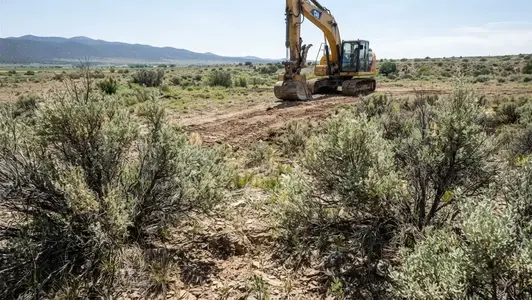
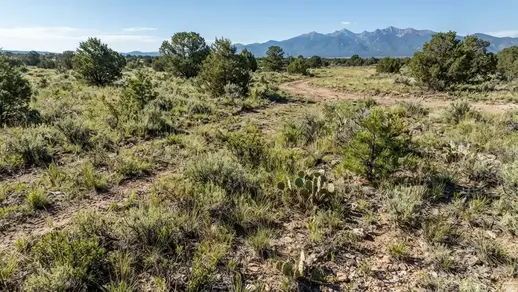
Selective Clearing
Selective land clearing focuses work around specific improvements,
access routes, or development areas instead of treating the entire
parcel as a construction site. This approach can be useful when you
want to preserve portions of the property while creating usable space
where it is actually needed.
- Homesite or cabin area
- Building site clearing
- Driveway or private road corridor
- Construction equipment access
- Utility trenching routes
- Septic related work areas
- Water system access areas
- Future structure locations
- Small recreation or gathering areas
- Clearing around existing improvements
Selective clearing may also be appropriate when existing vegetation
provides useful screening, shade, wind protection, habitat, or visual
separation. Instead of removing vegetation simply because it exists,
the clearing plan can be organized around the property's actual
development footprint.
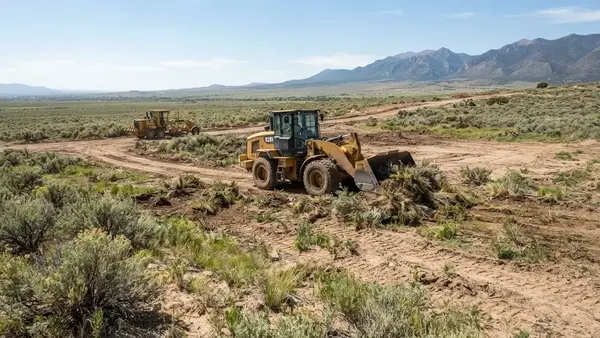
Larger Area Clearing
Larger-area land clearing may make sense when the property has a broader
land use objective or when multiple improvements need to be connected.
The clearing limits should still be defined before work begins so the
project has a clear scope instead of simply clearing as much acreage as
possible.
- Large access corridors
- Multiple development areas
- Extended driveway or road routes
- Agricultural or rural-use areas
- Multiple future building locations
- Extensive brush and vegetation removal
- Large construction staging areas
- Connected utility corridors
- Expanded property access
- Broader vegetation-management objectives
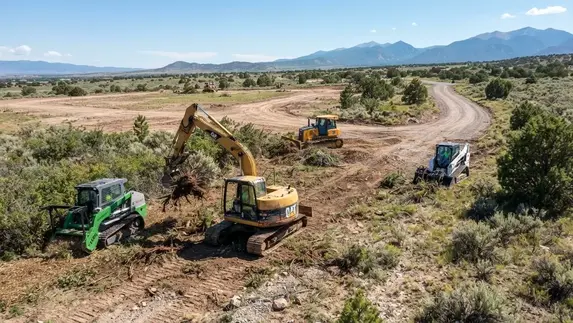
A larger clearing project can also be planned in phases. For example,
an owner may first clear the driveway and homesite, establish access,
complete excavation and grading, and then address additional acreage
later as the property's development progresses.
How Much Land Should You Clear?
The answer depends less on the total acreage of the property and more on
what you intend to do with the land. A rural parcel may contain a mixture
of proposed building areas, access routes, utility corridors, vegetation
that you want to retain, and portions that may not need to be disturbed at
all. Identifying those areas before equipment arrives can help create a
more controlled clearing scope.
For a new homesite, the clearing plan may include the future house location,
construction access, driveway entrance, utility route, septic related work
area, and space needed for excavation or grading. For an off-grid property,
the plan may also account for access to a well location, septic system,
solar equipment, water storage, outbuildings, and other improvements.
For larger rural acreage, the owner may instead be considering agricultural
use, improved access, vegetation management, multiple future homesites, or
a combination of uses. In those situations, clearing can be divided into
priority areas rather than assuming the entire parcel should be cleared at
once.
What Vegetation Needs to Be Removed?
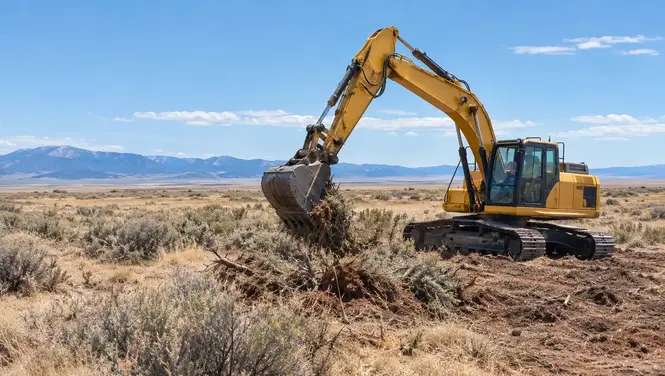
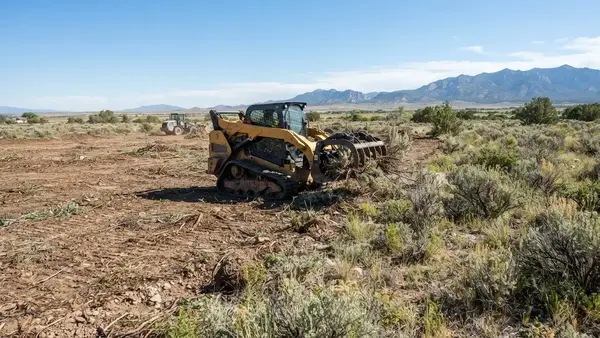
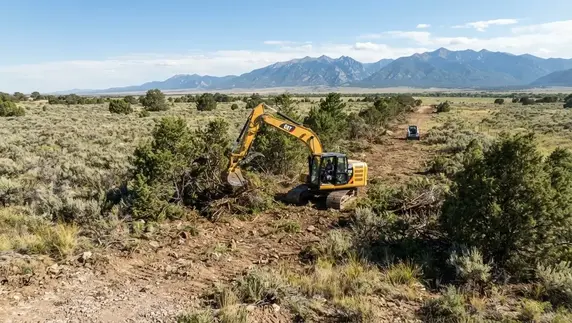
Land clearing does not necessarily mean removing every tree, shrub, or
plant from a property. The actual scope can include different combinations
of brush removal, woody vegetation removal, tree clearing, stump removal,
root removal, surface debris removal, and preparation of the ground for
subsequent excavation or grading.
The type and density of vegetation matter because a lightly vegetated
building area can require a very different clearing approach from dense
brush, scattered trees, larger woody growth, or areas containing buried
roots and stumps. Existing vegetation can also affect equipment access and
the amount of material that must be handled after clearing.
On rural property, it is also important to distinguish between vegetation
that needs to be removed for construction and vegetation that can remain.
Preserving selected trees or undisturbed portions of a parcel may be part
of the property owner's goals, particularly when the cleared area only
needs to accommodate a homesite, driveway, utility route, or other defined
improvement.
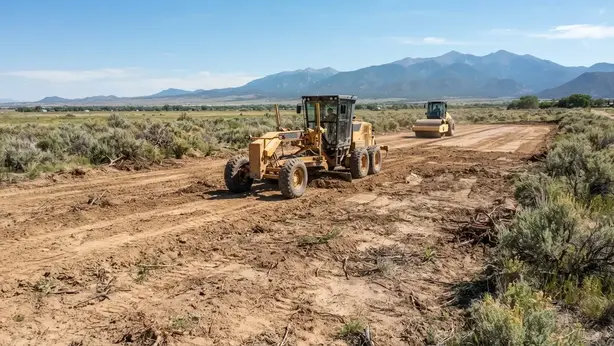
Clearing Driveways, Roads, and Access Corridors
A long rural driveway can require a clearing corridor well before the
driveway itself is constructed. Vegetation may need to be removed far
enough along the planned route to provide workable construction access and
allow the driveway or private road to be established.
The clearing scope can be coordinated with future driveway grading,
drainage work, gravel placement, culvert installation, excavation, and
construction access. Planning the corridor as part of the overall access
project helps avoid clearing an area that later has to be redesigned or
reopened for another phase of construction.
Clearing Utility and Infrastructure Corridors
Rural development can require access for utilities and other infrastructure.
Depending on the property and project, that may include routes associated
with electrical service, water systems, septic work, communications, or
other improvements. Clearing these corridors before trenching or related construction
can create a workable path for equipment and reduce conflicts between vegetation and planned infrastructure.
Where underground lines are part of the project, the route should be coordinated with the intended
utility trenching work before clearing limits are finalized.
For off-grid property, the same principle applies even when the development
is not connected to conventional utility infrastructure.
A property may need coordinated access for a well, septic system, solar equipment, water storage, outbuildings, or other improvements.
For a property using solar power, the clearing plan should account for the intended equipment location and access needs alongside the rest of the development layout; see our
off grid solar site preparation information for related planning considerations.
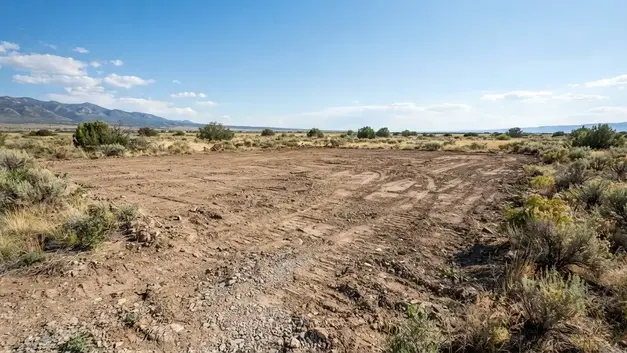
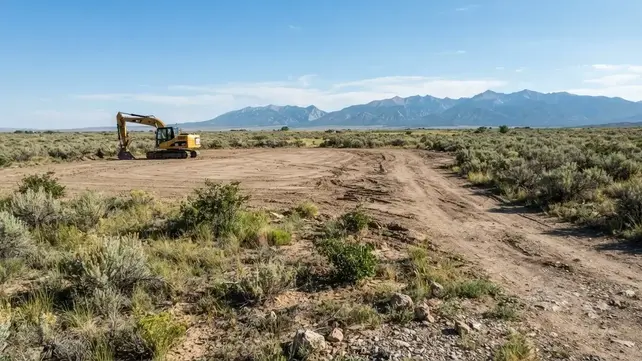
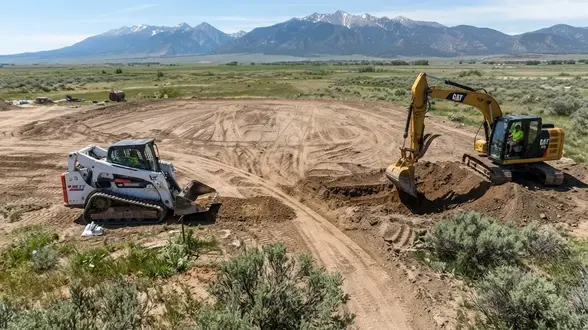
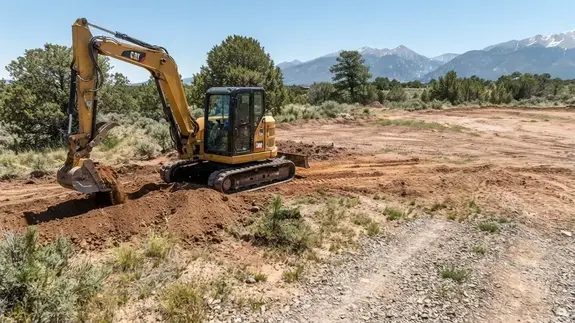
Clearing Before Excavation, Grading, or a Building Pad
Land clearing is often only the first step in preparing rural property.
Once unwanted vegetation, stumps, roots, and other obstacles have been addressed within the planned work area,
the property may still require excavation and site preparation,
grading, drainage work, driveway construction, gravel, or building pad preparation.
This is why clearing limits should be considered alongside the next phase
of construction. Clearing only the visible center of a future building
area may not provide enough room for equipment access, grading transitions,
drainage improvements, material handling, or other construction activities.
Conversely, clearing substantially beyond the planned work area can create
unnecessary disturbance and additional material-handling requirements.
Does Clearing More Acreage Cost More?
Generally, a larger clearing footprint means more vegetation, debris,
stumps, roots, equipment time, mobilization, and material handling may be
involved. However, acreage alone does not determine the cost of a rural
land-clearing project.
Clearing cost can also be affected by vegetation density, tree size,
stump and root conditions, terrain, slope, site access, hauling distance,
disposal or processing requirements, the amount of material present, and
whether the cleared area must be prepared for grading or excavation.
Two properties with the same acreage can therefore require very different
amounts of work.
A defined clearing footprint makes it easier to discuss the actual scope of
work. Instead of estimating an entire parcel by acreage alone, the project
can be evaluated according to the homesite, access routes, utility
corridors, development areas, vegetation conditions, and other improvements
that need to be addressed.
Planning a Phased Clearing Project
Rural property development does not always happen all at once. A property
owner may begin with driveway access and a homesite, then add a well,
septic system, cabin, shop, solar installation, agricultural area, or
additional improvements later.
A phased land-clearing plan can account for that sequence. Clearing the
areas required for the current phase while identifying likely future
corridors can help the property develop in stages without assuming every
portion of the parcel needs to be cleared immediately.
This approach is particularly relevant for larger Costilla County acreage,
rural homesteads, recreational properties, and off-grid projects where the
final property layout may develop over time.
What to Identify Before Clearing Your Property
-
Define the immediate development area:
Identify the homesite, cabin location, building area, or other improvement
that needs to be cleared first. If you are still evaluating undeveloped acreage,
review our Costilla County land buying guide
for additional considerations to investigate before committing to a parcel or planning improvements.
-
Map access:
Determine where the driveway, private road, construction entrance, and
equipment access need to run.
-
Identify utility routes:
Consider planned electrical, water, septic, communications, and other
infrastructure corridors.
-
Decide what vegetation should remain:
Mark trees, vegetation, screening areas, or portions of the property you
want to preserve where practical.
-
Consider the next construction phase:
Allow the clearing plan to work with future excavation, grading, drainage,
driveway construction, or building pad preparation.
-
Discuss material handling:
Determine how cleared vegetation, stumps, roots, and debris will be
handled as part of the project scope.
-
Account for site conditions:
Terrain, slope, vegetation density, access, and ground conditions can all
affect how the clearing work is approached.
The goal is not simply to remove vegetation. The goal is to create the
usable access and development areas your property actually needs while
coordinating the clearing work with the improvements that come next.
Costilla County Land Services can evaluate the intended clearing area,
existing vegetation, access, terrain, and planned use to help establish a
practical scope for your rural property.