Gravel Delivery • Driveway Materials • Private Roads • Rural Access

Connect With Local Experts

(719) 695-7224

⭐ Gravel Delivery • Driveway Gravel • Private Road Materials • Construction Access • Building Site Aggregate • Gravel Placement • Fill Material • Rural Parking Areas • Driveway Base & Surface Material • Rural Land Development Across Costilla County

Gravel Delivery Services in Costilla County, Colorado

Rural properties often need dependable aggregate delivery for driveways, private roads, construction access, building sites, parking areas, and other land development projects. The right amount of gravel or fill material can provide the base and surface material needed to improve access, support ongoing construction, and develop practical rural property improvements. Costilla County Land Services provides gravel delivery, driveway materials, private road aggregate, construction access materials, fill delivery, and rural site material delivery throughout Costilla County.

Serving San Luis, Fort Garland, Blanca, San Acacio, San Francisco, and rural properties throughout Costilla County and the surrounding San Luis Valley.

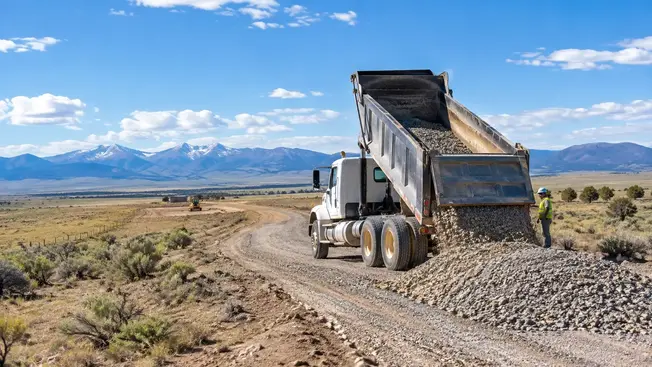
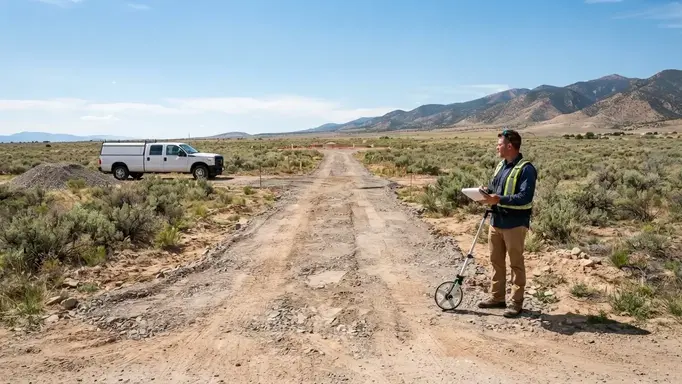
Rural gravel delivery project for a driveway and property access route in Costilla County Colorado
Driveway & Private Road Gravel Supplying aggregate for rural driveways, private roads, property entrances, and extended access routes where dependable surface and base materials are needed for everyday property access.
Construction Access Materials Delivering gravel and fill materials for construction entrances, equipment access, building sites, staging areas, and rural projects where improved access is needed during land development.
Material Quantities & Delivery Planning Planning gravel quantities around the approximate length, width, and intended depth of the project while accounting for the type of area being improved and the amount of material required.
Rural Gravel & Fill Delivery Coordinating material delivery for rural properties throughout Costilla County, including driveway improvements, private roads, house sites, parking areas, and other land development projects.

Gravel Delivery for Rural Property in Costilla County, Colorado

Gravel is often part of the basic infrastructure that makes rural property usable. A new driveway, private access road, construction entrance, homesite, parking area, or other improvement may require aggregate delivered directly to the property. The right delivery plan depends on what the material needs to accomplish, how much area is being improved, the planned material depth, existing site conditions, and how easily a delivery truck can reach the unloading location. When a route needs preparation before aggregate is placed, coordinate delivery with driveway and road grading or excavation and site preparation.

Ordering gravel for rural property is not simply a matter of choosing a number of truckloads. A long driveway can require substantially more material than a short residential entrance, while a construction access route may have different requirements from a finished driveway. Existing gravel, exposed ground, soft or low areas, drainage patterns, driveway width, and the condition of the underlying route can all affect how much material makes sense for the project.

  • New & Existing Driveways:
    Gravel can be used to establish a new rural driveway or improve an existing access route. Before ordering material, it helps to consider the driveway's length, usable width, planned depth, existing surface, and whether the route needs grading or other preparation first.
  • Private Roads & Extended Access:
    Rural acreage can involve much longer access routes than a typical residential driveway. Material quantities increase with road length and width, making accurate dimensions and delivery planning particularly important for extended private roads and internal property access.
  • Construction Access:
    Building a home, cabin, workshop, garage, or other improvement can require dependable access for equipment, workers, concrete, building materials, and delivery vehicles. Gravel can provide an improved route for construction activity where the existing property access is not adequate for the work ahead.
  • Base Material & Surface Gravel:
    A gravel driveway or access route may require more than one layer of material. Depending on the existing route and intended use, the project may involve preparing the underlying area and then adding appropriate aggregate rather than simply placing new gravel over an unsuitable surface.
  • Gravel Quantity & Coverage:
    Material requirements are driven primarily by the dimensions of the area being improved and the intended depth of the gravel. Length, width, depth, existing material, and the number of areas receiving aggregate should be considered when estimating the total quantity and number of loads.
  • Rural Delivery Access:
    Delivering gravel to undeveloped property requires more than a usable street address. The delivery route, entrance width, available turning space, overhead or physical obstacles, ground conditions, and unloading location can all affect how material can be delivered to the property.
  • Where the Material Will Be Unloaded:
    A gravel delivery plan should identify where the material needs to go before the truck arrives. Material may be stockpiled in an accessible area or unloaded along the portion of the driveway, road, building site, or property improvement where it will eventually be used.
  • Drainage Comes Before Simply Adding More Gravel:
    Gravel does not automatically correct a drainage problem. If water is moving across the driveway or collecting in low areas, land grading and leveling may need to be considered before additional aggregate is placed. Adding more material over a recurring water problem can simply bury the problem instead of addressing it.
  • Existing Driveway Condition:
    An existing gravel road or driveway may need additional material, reshaping, or preparation depending on its current condition. Looking at the existing surface and underlying route helps determine whether the project is primarily a material-delivery job or whether grading and site preparation should be considered as part of the work.
  • Homesites & Rural Building Projects:
    Gravel may be needed around a developing homesite for construction access, equipment staging, parking, material deliveries, or connections between the main driveway and building area. Coordinating these needs with the broader site layout can help avoid installing access in a way that later conflicts with the building project.
  • Workshops, Garages & Rural Improvements:
    Gravel can also support access and working areas around detached garages, workshops, agricultural improvements, storage areas, and other rural property projects. The required material depends on the size and intended use of each area rather than a one size fits all driveway specification.
  • Rural Land Development:
    Gravel delivery can be one part of a larger property development plan. An owner may need initial access first, followed by a homesite, parking area, construction route, utility work, or other improvements. Planning the aggregate needs together can help determine where material is needed and when it should be delivered.

More Gravel Is Not Always the Answer

One of the most important parts of planning a rural gravel project is understanding what is happening underneath and around the driveway. If an access route has poor drainage, recurring low spots, inadequate grading, or an unsuitable underlying surface, simply adding another layer of gravel may not solve the problem. The existing condition of the route should be considered before deciding how much new material to order.

The same principle applies to quantity. A long rural driveway may need considerably more aggregate than a short entrance, but ordering too little can leave sections unfinished while ordering material without measuring the project can create unnecessary cost. Length, width, planned depth, existing material, delivery access, and the intended use of the finished area all help establish a more practical gravel delivery plan.

For undeveloped Costilla County property, it can also make sense to consider future improvements before placing the first load. If a driveway will eventually serve a house site, workshop, garage, parking area, septic work, utility installation, or other rural improvement, the access route and material delivery plan should fit into the larger development layout rather than being treated as an isolated gravel project.

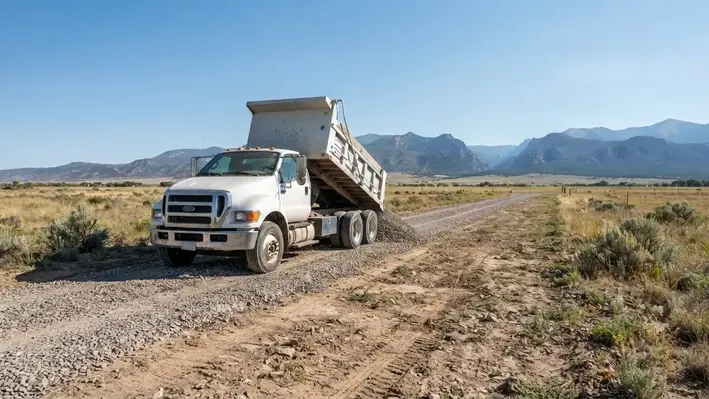
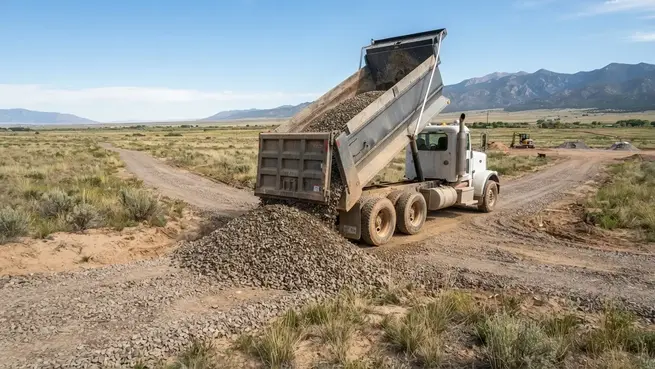
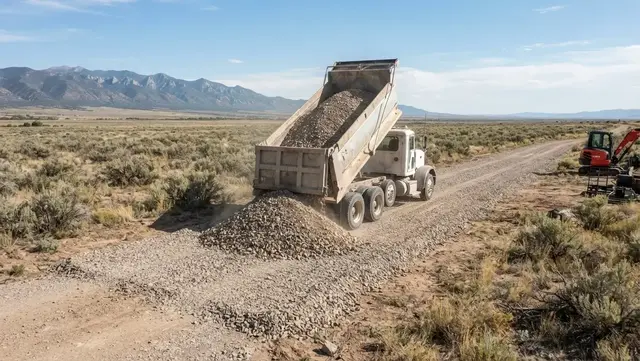
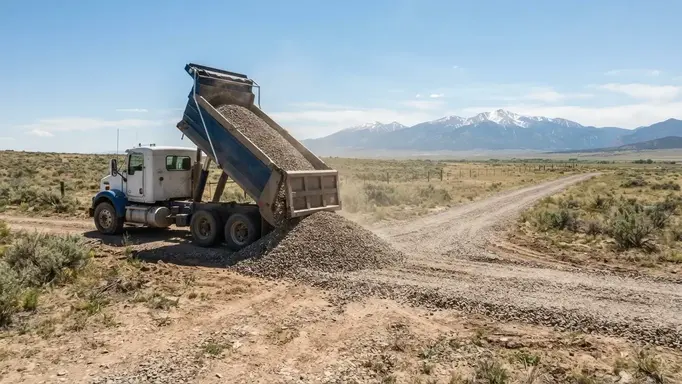
Gravel delivery truck unloading aggregate along a rural driveway in Costilla County Colorado

Rural gravel delivery requires planning for the driveway route, delivery access, unloading location, and the amount of aggregate needed for the property.

What Gravel Delivery Includes for a Rural Costilla County Property

Gravel delivery is more than simply bringing a load of aggregate to a rural property. Depending on the project, material may be needed for a driveway, private road, construction entrance, building site access, parking area, workshop, garage, or another property improvement. The appropriate delivery plan depends on the amount of material required, where it needs to go, how the delivery truck can access the property, and whether additional site preparation is needed.

Gravel delivery can also overlap with other stages of rural land development. Some projects involve delivery only, while others require material to be stockpiled, placed, spread, or incorporated into a driveway or access route after delivery. Understanding these differences before ordering material helps property owners plan the actual scope rather than treating every gravel job as a simple truckload delivery.

Aggregate Material Delivery

Transporting gravel or other aggregate material to the property and unloading it at a practical location based on the project quantity, property entrance, delivery route, and intended use of the material.

Gravel Stockpiling

Unloading material at an accessible stockpile location when the final driveway, building area, parking area, or other work zone is not yet ready to receive the aggregate directly.

Driveway Gravel Delivery

Delivering aggregate for new rural driveways, existing driveway improvements, driveway resurfacing, private access routes, and other areas where additional gravel is needed to establish or improve property access.

Private Road Materials

Supplying gravel for longer rural access roads and internal property routes where material quantities, delivery locations, and placement requirements can differ substantially from a short driveway project.

Construction Access Gravel

Providing aggregate for construction entrances, equipment access, building site approaches, staging areas, and other temporary or permanent routes needed during rural property development.

Base & Surface Material

Planning aggregate needs around whether the project requires material for an underlying driveway base, a finished surface, or additional material for an existing gravel route that is being improved.

Gravel Placement & Spreading

Moving delivered aggregate into the area where it will actually be used and distributing the material across a driveway, private road, parking area, construction route, or other planned improvement. Placement depends on the amount of material, the area being covered, and the intended use of the finished surface.

Grading & Related Earthwork

Coordinating gravel delivery with grading, reshaping, clearing, excavation, or other site preparation when the existing route needs work before new aggregate can be placed effectively. Preparing the underlying ground can help address uneven areas and establish more suitable grades for the intended driveway, road, or access surface.

Rural Land Development Access

Planning gravel delivery as part of larger rural projects that may include a homesite, septic system, water well, utility trenching, workshop, garage, parking area, or solar installation. Coordinating these needs with off grid land preparation helps owners consider access and material delivery alongside future property improvements.

Gravel Delivery Is Only One Part of the Project

A truckload of gravel sitting beside an access route does not create a finished driveway or road by itself. The material may need to be stockpiled, spread, shaped, or incorporated into the existing route, while the underlying property may require clearing, grading, drainage work, or other preparation before the aggregate can perform as intended.

This distinction is especially important on undeveloped Costilla County properties. A landowner may initially need gravel simply to establish construction access, but that same route may eventually serve a house, cabin, workshop, garage, septic system, well, utilities, parking area, or other improvement. When a new home is planned, coordinate the access route with house pad preparation so equipment access and the building area can be considered together. Planning delivery around the property's larger development can help avoid placing material where it may later need to be moved or rebuilt.

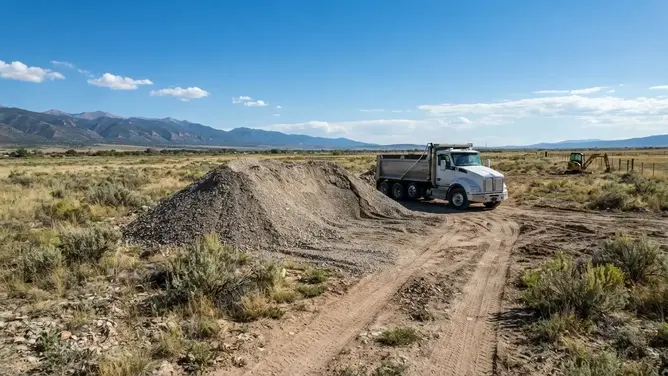
Aggregate delivered and stockpiled beside a rural access route in Costilla County Colorado

Gravel may be delivered directly to the work area or stockpiled where it can be accessed later for placement, spreading, and driveway or site work.

Choosing the Right Gravel or Aggregate for Your Project

Not every gravel delivery serves the same purpose. Material selected for a driveway surface may not be the same material needed for a new driveway base, construction access route, parking area, building site, or other rural improvement. Material selection depends on the existing surface, expected traffic, drainage conditions, planned depth, and how the finished area will be used.

On rural properties, one project may also require several different aggregate applications. A new driveway could need underlying preparation followed by base and surface material, while a construction project may need additional aggregate for equipment access, staging, parking, or material delivery. Identifying each area separately helps keep the material order tied to the actual property improvements rather than treating the entire project as one generic gravel application.

Driveway Surface Material

Surface aggregate provides the usable driving layer of a gravel driveway or private access route. Material selection should be considered in relation to the existing driveway, expected traffic, drainage, planned depth, and how the finished route will be used.

Driveway Base Material

A new driveway crossing undeveloped ground may need a substantial underlying base before the final driving surface is added. Base needs depend on the starting condition of the route, planned traffic, and whether the existing ground has already been prepared.

Construction Access Aggregate

Construction access may receive repeated traffic from equipment, workers, delivery vehicles, and material trucks. Aggregate planning should account for the route's intended use rather than treating it like a short residential driveway.

Parking & Work Areas

Parking areas, equipment staging areas, workshops, garages, and building site work areas can require different quantities from a narrow driveway. Measuring each area separately helps establish the total material requirement.

House Site Access

A rural homesite may need aggregate for the approach to the building area, construction access, worker parking, material staging, or connections between the main driveway and future improvements.

Off Grid Property Access

Remote or undeveloped properties may require gravel as part of a larger access plan serving a future home, cabin, well, septic system, utility route, solar equipment, parking area, or other improvement.

Material Selection Should Follow the Job

The useful question is not simply, "How much gravel do I need?" It is, "What does this material need to accomplish?" A new driveway over undeveloped ground, an existing driveway that needs resurfacing, and a construction entrance carrying repeated equipment traffic may each require a different material plan.

It is also important to separate the areas being improved. A driveway, parking area, building site access route, and private road can have different dimensions and uses. Measuring those areas independently makes it easier to determine the quantity needed for each part of the project and reduces the chance of ordering material without a clear placement plan.

Gravel delivery planning should also account for how the material will reach the property and where it will be unloaded. Truck access, the delivery route, available turning space, unloading location, and whether the aggregate will be stockpiled or placed directly along the project can all affect how the delivery is handled.

Rural driveway under construction with prepared base and aggregate surface material in Costilla County Colorado

Rural driveway construction may involve prepared ground, underlying aggregate, and surface gravel rather than a single uniform layer of material.

Not Sure What Aggregate Your Rural Driveway Needs?

The right gravel depends on how the area will be used, what condition the existing route is in, whether the project needs a stronger underlying layer, and how the finished surface will be maintained. If you are deciding between materials for a new driveway, private road, construction access, or another rural work area, call to discuss the project before ordering material.

Call (719) 695-7224

How to Measure a Rural Driveway Before Ordering Gravel

Accurate driveway dimensions are one of the simplest ways to improve a gravel delivery estimate. Rural driveways are often irregular rather than perfect rectangles, with changing widths, turnouts, parking areas, approaches, curves, and connections to homesites or private roads. Measuring the actual areas that will receive aggregate provides a much more useful starting point for estimating gravel quantity and delivery requirements.

The basic measurements are length, usable width, and planned material depth. Those dimensions can then be separated into individual project areas when the property includes a driveway, private road, construction entrance, parking area, turnaround, or other aggregate surface. Existing gravel, exposed ground, low areas, drainage problems, and the condition of the underlying route should also be considered because material quantity alone does not determine whether additional grading or preparation is needed.

1. Measure the Driveway Length

Measure the actual route that needs gravel rather than estimating only from the public road to the general vicinity of the property. For a long rural driveway, measure the complete usable route from the entrance to the point where the aggregate will end.

2. Determine the Usable Width

Identify the approximate driving width that will receive aggregate. If the driveway changes width along its route, measure those sections separately rather than using one average width for the entire property.

3. Establish the Planned Gravel Depth

Material depth affects the total gravel quantity. Surface area alone does not tell you how much aggregate the project requires. The planned depth should be considered along with the existing surface, intended traffic, and whether the project involves base material, surface gravel, or both.

4. Divide Irregular Driveways Into Sections

Rural driveways may widen, narrow, curve, or transition into other areas. Divide the route into practical sections when dimensions change significantly so each portion can be considered separately when estimating the total aggregate requirement.

5. Measure Turnouts & Wider Areas Separately

Turnouts, passing areas, turnaround areas, and wider sections near a homesite can require additional material beyond the main driveway width. Measure these areas separately rather than assuming they are included in the standard driveway dimensions.

6. Measure Parking & Staging Areas Separately

Parking areas, equipment staging areas, material storage areas, workshop approaches, and construction work areas should be measured independently when they are receiving gravel. These areas can add substantially to the total surface area of a rural project.

7. Measure Private Roads & Extended Access

A private road serving multiple parts of a rural property can be considerably longer than a typical driveway. Measure the portions that actually require aggregate and identify any separate branches, internal access routes, or connections to future improvements.

8. Identify Construction Access Areas

If gravel is being ordered for construction access, measure the route needed by equipment, dump trucks, material deliveries, workers, and other construction vehicles. Temporary construction access can represent a separate gravel requirement from the eventual finished driveway.

9. Check the Existing Driveway Condition

Look at the existing gravel, exposed ground, ruts, soft or low areas, uneven sections, and the condition of the underlying route. An existing driveway that needs resurfacing may have different material requirements from a new driveway being constructed over undeveloped ground.

10. Look for Drainage Problems Before Ordering More Gravel

Identify places where water crosses the driveway, collects in low areas, follows the route, or has previously caused erosion or deterioration. Additional gravel may not correct an underlying drainage or grading problem, so those conditions should be considered before determining the final material quantity.

11. Calculate the Aggregate Area

Use the measured length and width of each project area to establish the approximate surface area receiving gravel. Separating the driveway, parking area, private road, and other aggregate areas makes the overall quantity calculation easier to organize.

12. Account for Material Depth and Quantity

Once the surface area and planned depth are established, those measurements can be used to estimate the amount of aggregate needed. The final quantity may also depend on the existing route, material type, preparation requirements, and how the gravel will be placed and compacted.

13. Consider Truckloads & Delivery Logistics

The estimated aggregate quantity can be translated into an appropriate delivery plan based on the available truck capacity and project requirements. Long rural drives, multiple unloading locations, limited truck access, and separate project areas can all affect how deliveries are organized.

14. Identify Where the Gravel Will Be Unloaded

Before the truck arrives, determine where the aggregate should be unloaded or stockpiled. The delivery entrance, available turning space, ground conditions, overhead obstacles, and distance from the intended placement area can affect the practical delivery plan.

Measure Irregular Rural Routes in Sections

If a driveway changes width, includes a turnout, widens near a homesite, connects to a parking area, or continues into a longer private road, measure those portions separately. Breaking an irregular rural route into smaller sections gives a much more useful starting point than treating the entire driveway as one uniform rectangle.

For a new driveway on undeveloped land, also separate the driveway from other areas that may eventually receive gravel. A construction entrance, house site access, parking area, workshop approach, or private road can each represent a different material requirement. If you are evaluating acreage before purchasing, our Costilla County land buying guide can help you consider property access and future development needs before budgeting for driveway and site improvements.

Measurements are useful for developing a gravel delivery estimate, but they do not replace an evaluation of the existing route. If the driveway has drainage problems, inadequate grading, unstable sections, significant low areas, or other preparation needs, the project may require grading or related earthwork before additional aggregate is placed.

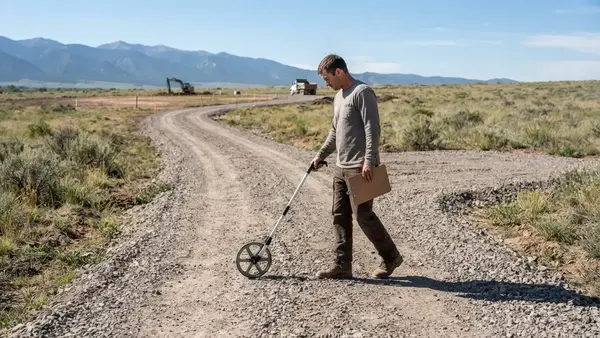
Long rural driveway being measured and planned for gravel delivery on Costilla County acreage

Long rural driveways are easier to plan when the route, changing widths, turnouts, parking areas, and other gravel sections are measured separately.

How Much Gravel Does a Rural Property Need?

Gravel quantity depends on the dimensions of the area being improved, the planned material depth, the type of project, the existing surface, and how the aggregate will be used. Estimating the quantity before ordering helps determine the approximate amount of material and number of truckloads needed for a driveway, private road, construction entrance, parking area, or other rural property improvement.

The basic calculation starts with the area receiving gravel and the planned depth of the material. For irregular rural properties, however, the project may need to be divided into multiple areas before the total quantity can be estimated. A long driveway, parking area, turnaround, construction entrance, and house-site access route may each have different dimensions and material requirements.

  • Length:
    Longer driveways and private roads require more aggregate because a larger route must be covered. Measure the actual section receiving material rather than estimating only from the public road to the general property entrance.
  • Width:
    Increasing the usable driving width increases the total area receiving gravel. Turnouts, parking expansions, wider approaches, equipment areas, and other enlarged sections should be included in the quantity estimate.
  • Material Depth:
    A deeper aggregate layer requires more material than a thinner surface application. Planned depth should be considered in relation to the existing route, intended use, traffic, and whether the project involves base material, surface gravel, or both.
  • Existing Driveway Condition:
    An established gravel driveway and a new route over undeveloped ground have different starting conditions. Existing gravel, exposed ground, ruts, low areas, grading, drainage, and the condition of the underlying route can all affect the overall project scope.
  • Separate Project Areas:
    A driveway, private road, parking area, turnaround, construction entrance, and building site access route should be measured separately when their dimensions or purposes differ. Combining them into one rough measurement can make the material estimate less useful.
  • Base & Surface Requirements:
    A new driveway may require material for an underlying base as well as a usable surface layer. An existing driveway may primarily need additional surface aggregate. The quantity should reflect what the project is actually trying to build or improve.
  • Truckload Quantity:
    Once the approximate aggregate requirement is established, the material can be organized into an appropriate number of deliveries based on the quantity each truck can carry. Actual truck capacity can vary, so the delivery plan should be based on the material order rather than assuming every truckload is identical.
  • Delivery & Stockpile Location:
    The amount of gravel is only part of the delivery plan. The location where each load will be unloaded or stockpiled can affect how practical it is to distribute the material across the property after delivery.

A Simple Gravel Quantity Starting Point

For a basic rectangular area, approximate material volume can be considered by multiplying the length by the width and the planned material depth. If the driveway is irregular, divide it into smaller sections and estimate each section separately before combining the results.

For example, a 500-foot driveway that is approximately 12 feet wide represents a very different material requirement from a 500 foot driveway that is 20 feet wide. Adding a larger turnout, parking area, construction entrance, or additional private road section can increase the total area receiving aggregate as well.

The resulting quantity should be treated as an estimate rather than an automatic final order. Existing material, actual site conditions, planned depth, aggregate type, preparation requirements, placement method, and delivery logistics can all affect how much material is ultimately appropriate for the project. If the route needs reshaping, drainage correction, or preparation before gravel is placed, consider land grading and leveling or excavation and site preparation as part of the overall scope.

Driveway Base Material vs. Surface Gravel in Costilla County

Gravel access on rural Costilla County properties is not always a single-layer application. A new driveway across undeveloped acreage may require preparation and a suitable base before a finished driving surface is established, while an existing driveway may only need additional surface aggregate. Understanding the difference can help determine whether a project calls for gravel delivery, resurfacing, grading, preparation, or a combination of site work services.

The right approach depends on the condition of the existing route and how the property will be used. A new driveway serving a future homesite can have different requirements from an established driveway near an existing residence. Construction access for a new cabin, workshop, garage, or other rural improvement can also have different needs from the eventual finished driveway. Looking at the complete access route helps determine where base material, surface gravel, grading, and other preparation fit into the project.

Start With the Existing Ground

Before ordering gravel for a new Costilla County driveway, consider the condition of the route across the property. Clearing, excavation, grading, shaping, drainage work, or other preparation may be needed before aggregate can be incorporated into the planned access route.

Consider the Driveway Base

A base layer can provide the foundation for a finished driveway or private access route. The appropriate approach depends on the existing ground, intended use, expected traffic, drainage conditions, and overall project design rather than applying one universal base specification to every rural property.

Add the Surface Gravel

Surface gravel provides the usable upper layer of a gravel driveway or private road. It may be part of a new driveway project or added to an established route when the underlying driveway remains suitable and the primary need is additional surface material.

Evaluate Driveway Resurfacing

Resurfacing is different from rebuilding. An existing rural driveway that has lost surface material but remains properly shaped and supported may need additional aggregate rather than complete reconstruction. The existing route should be considered before deciding which approach makes sense.

New Driveway on Undeveloped Acreage

A new driveway serving undeveloped Costilla County land may involve more than gravel delivery. The route may first require clearing, excavation, grading, shaping, or other preparation before base and surface aggregate can be incorporated into the access route.

Build Construction Access First

A future homesite may need reliable construction access before the permanent driveway is complete. Excavators, dump trucks, concrete deliveries, building materials, utility crews, septic contractors, well contractors, and other vehicles may need access during different stages of rural development.

Connect Access to the Future Homesite

When gravel is being planned for a future house or cabin, consider how the driveway will connect to the proposed building area. The access route may eventually need to accommodate parking, construction staging, material deliveries, garage access, and everyday residential traffic.

Account for Long Rural Access Routes

Some Costilla County properties require longer private driveways or internal access routes rather than a short residential entrance. Material requirements can vary along the route, particularly where the driveway changes width, connects to other areas, or serves multiple parts of the property.

Check Drainage Before Adding More Gravel

Recurring water problems can affect an existing gravel driveway. Low areas, standing water, erosion, or water moving along or across the route may indicate that grading or drainage should be considered before simply adding another layer of surface aggregate.

Know When Resurfacing Is Not Enough

Deep ruts, soft sections, repeated deformation, drainage problems, or other recurring failures can indicate that an existing driveway needs more than additional surface gravel. The appropriate scope may include grading, reshaping, drainage work, additional base material, or other site preparation.

Consider Workshops, Garages & Future Improvements

A rural driveway may eventually serve more than the primary residence. Workshops, detached garages, storage areas, additional parking, agricultural improvements, and other structures can create additional access needs. Considering those future uses can help avoid rebuilding portions of the driveway later.

More Surface Gravel Cannot Correct Every Driveway Problem

If a Costilla County driveway repeatedly develops deep ruts, soft sections, standing water, severe deformation, or other recurring problems, adding another layer of surface gravel may not address the underlying cause. The existing route should be considered before deciding whether the project needs additional aggregate, grading, drainage work, base preparation, or more substantial reconstruction.

The distinction between base material and surface gravel is especially important when comparing a new driveway with driveway resurfacing. A new access route across undeveloped acreage may require a sequence of site preparation, base construction, and surface material, while an established driveway may only need additional gravel to restore its usable surface.

For rural land development, the driveway should also be considered in relation to the rest of the property. Construction access, the future house pad, septic or wastewater improvements, water supply, utility routes, solar equipment, parking, workshops, and other improvements can all influence where the access route needs to go and how it should be prepared.

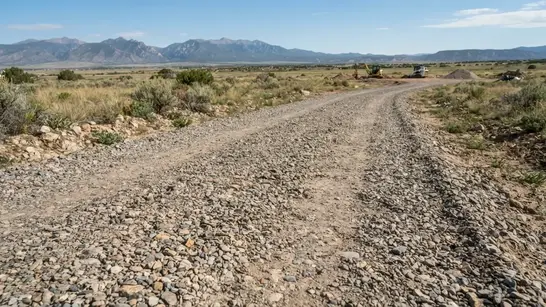
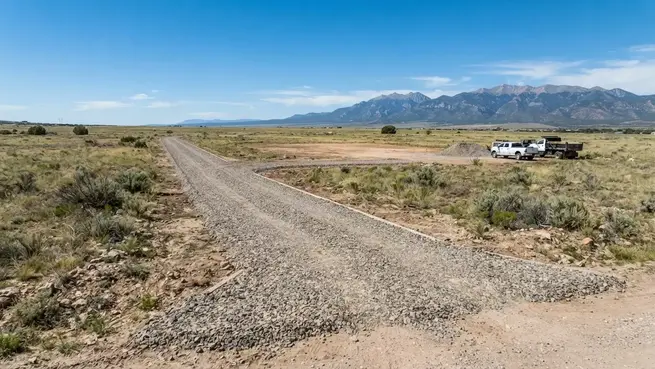
Professionally improved gravel driveway providing rural property access in Costilla County Colorado

A properly planned gravel access route can support construction, future homesite development, parking, and everyday rural property access.

Building a New Gravel Driveway on Rural Property

Creating a new gravel driveway across undeveloped Costilla County property is more involved than simply delivering aggregate to the property entrance. The access route needs to be established, prepared, and connected to the areas it will eventually serve. A driveway planned around the future use of the property can also reduce the chance of rebuilding access when additional improvements are added later.

New rural driveway projects can involve several stages, including route planning, clearing, excavation, grading, base preparation, gravel delivery, placement, and final shaping. The exact scope depends on the existing property conditions and what the driveway is expected to serve, such as a future home, cabin, workshop, garage, parking area, septic system, water well, utility route, or other rural improvement.

1. Establish the Driveway Route

Determine where the driveway will enter the property and where it needs to lead. Consider the future homesite, parking, workshop, garage, utilities, septic or water improvements, and other planned areas that will eventually depend on the access route.

2. Consider the Property Layout

A driveway should be considered as part of the larger property layout rather than as an isolated strip of gravel. The route may need to connect the property entrance with a future building area, parking area, private road, utility corridor, or other planned improvement.

3. Prepare the Driveway Route

Undeveloped property may require clearing, excavation, grading, shaping, or other preparation before aggregate can be placed effectively. The existing condition of the route should be considered before determining the final gravel quantity.

4. Establish the Driveway Base

A new gravel driveway may require an underlying base before the finished surface material is added. The appropriate approach depends on the existing ground, planned use, expected traffic, drainage conditions, and overall site preparation requirements.

5. Confirm Driveway Dimensions

Measure the driveway length and usable width, along with any turnouts, wider sections, parking areas, construction entrances, or other portions that will receive aggregate. These measurements help establish the approximate material quantity.

6. Plan Gravel Delivery

Delivery planning should account for the property entrance, truck access, unloading locations, available turning space, stockpile areas, and the portions of the driveway that will receive material. Long rural routes may require a more deliberate delivery plan than a short residential driveway.

7. Place & Distribute the Gravel

Delivered aggregate needs to be placed where it will actually be used and distributed across the planned driveway area. Depending on the project, material may need to be spread, shaped, or incorporated into the access route rather than simply left in delivery piles.

8. Consider Drainage & Water Movement

Before finalizing the driveway, consider where water may cross, collect, or move along the access route. If drainage or grading conditions are contributing to problems, additional gravel alone may not provide the appropriate solution.

9. Connect Access to the Future Homesite

If the driveway will eventually serve a house or cabin, the access route should connect logically with the planned building area. Construction equipment, material deliveries, workers, parking, and everyday property access may all depend on the driveway after the homesite is developed.

10. Plan for Future Rural Improvements

A new driveway may eventually serve a septic system, water well, utility route, solar equipment, workshop, garage, parking area, or other improvement. Considering those future uses early can help prevent access routes from being rebuilt when the property develops.

A New Driveway Is Part of the Property Development Plan

One of the biggest differences between a new rural driveway and simply resurfacing an existing driveway is that the access route is being established from the beginning. The location, width, preparation, drainage considerations, base, gravel quantity, and final connection to the property all need to work together.

This becomes especially important when the driveway is being created for undeveloped acreage. Construction access may be needed before the future house or cabin exists, while septic, water, utilities, solar equipment, parking, workshops, garages, or other improvements may be added later. Planning the driveway around those future uses can help make the access route more useful throughout the property's development.

Gravel delivery is therefore only one part of building a new rural driveway. Depending on the starting condition of the property, the project may also involve clearing, excavation, grading, base preparation, gravel placement, drainage considerations, and coordination with the larger site development plan.

Newly constructed rural gravel driveway extending across undeveloped property in Costilla County Colorado

A new rural gravel driveway can be planned as part of the property's larger development, connecting the entrance with future homesites, work areas, and other improvements.

Building a New Gravel Driveway to Reach Your Rural Property?

A new driveway is more than a strip of gravel across the property. The route may need to connect the property entrance with a homesite, work area, parking area, or future improvements while accounting for existing ground conditions and the way vehicles will use the access. Call to discuss the driveway route and the gravel work needed to establish practical rural access.

Call (719) 695-7224

Gravel Driveway Resurfacing vs. Rebuilding

An existing gravel driveway may need anything from a relatively simple surface refresh to more substantial reconstruction. The appropriate scope depends on the condition of the existing route, including its surface, grading, drainage, underlying support, and how the driveway is expected to perform after the work is completed.

Adding gravel can be effective when the existing driveway remains reasonably shaped and supported but has lost surface material. Other driveways may have recurring ruts, washboarding, low areas, drainage problems, or underlying deterioration that require grading, reshaping, or more extensive preparation before new aggregate is placed.

Surface Refresh

If the driveway remains reasonably shaped and supported but has lost surface material, additional aggregate may be enough to improve the usable driving surface without rebuilding the entire route.

Regrading & Reshaping

Ruts, washboarding, uneven sections, displaced gravel, or distorted driving lanes may require reshaping or grading before new surface material is placed. Reworking the existing route can help prepare it for additional aggregate.

Drainage Problems

Recurring water accumulation, erosion, or water moving along the driveway can contribute to repeated deterioration. If drainage or grading is part of the problem, adding more gravel alone may not address the underlying condition.

Additional Base Material

Some existing driveways may need more than surface gravel when the underlying route does not provide adequate support for the intended use. The appropriate approach depends on the existing condition, planned traffic, and overall driveway design.

More Extensive Reconstruction

A severely deteriorated driveway may require more extensive grading, excavation, reshaping, base preparation, drainage work, or other earthwork before a new finished gravel surface can be established.

Gravel Delivery & Placement

Once the existing route has been evaluated, the project can be planned around the amount of aggregate required, where material will be unloaded, and whether the gravel will also need to be spread, shaped, or incorporated into the driveway.

Changes in Property Use

An existing driveway may also need improvement because the property itself is changing. A future home, cabin, workshop, garage, construction project, or increased traffic can create access needs that the original driveway was not designed to serve.

Long Rural Driveways

Longer rural driveways may have different conditions along different portions of the route. One section may only need additional surface gravel while another may require grading, drainage work, or more substantial preparation.

More Gravel Is Not Always the Same as Rebuilding a Driveway

An existing driveway that has simply lost surface material may respond well to additional aggregate. A driveway with recurring ruts, poor drainage, soft areas, severe deformation, or other underlying problems may require more work before new gravel can provide a durable improvement.

The distinction matters when planning a gravel delivery project. If the existing route is suitable for resurfacing, the primary requirement may be material quantity and placement. If the route needs regrading, drainage improvements, base preparation, or reconstruction, those requirements should be considered before determining the final gravel order.

For rural Costilla County properties, the same driveway may also need to support changing uses over time. Construction access for a future homesite can place different demands on the route than everyday residential access, while workshops, garages, parking areas, septic work, utility installation, or other improvements can create additional access requirements.

Existing rural gravel driveway being resurfaced and reshaped on a Costilla County property

Existing gravel driveways may require resurfacing, reshaping, grading, or more extensive reconstruction depending on the condition of the route.

Gravel Truck Access, Unloading & Delivery Logistics in Costilla County

Gravel delivery to rural Costilla County property can involve more than getting a truck to the property's mailing address. Many landowners are developing undeveloped acreage for a future home, cabin, workshop, driveway, private road, or off-grid improvement. The delivery vehicle therefore needs a practical route to the property and a usable location where the aggregate can be unloaded.

This is particularly important when gravel is being delivered to rural property near San Luis, Blanca, Fort Garland, San Acacio, or other Costilla County communities. A property entrance may lead to a long private driveway, a temporary construction route, a future homesite, or another improvement area that is not yet developed. Planning the delivery route and unloading location before material arrives can make the larger gravel project easier to organize.

  • Rural Property Entrance:
    The entrance from the public road should provide a practical path for the delivery vehicle. Gates, narrow openings, sharp turns, steep approaches, or constrained entrances may affect where material can be delivered on a rural Costilla County property.
  • Driveway & Private Road Access:
    The usable width and condition of the access route matter when determining whether the delivery vehicle can reach the intended unloading location. Longer private driveways may require the material to be unloaded at a more accessible point and moved afterward.
  • Turning & Maneuvering Space:
    Rural acreage can have limited space for a delivery vehicle to turn, reposition, or approach the unloading area. The available maneuvering space should be considered before deciding where aggregate will be delivered.
  • Unloading Location:
    Identify where the gravel should be placed before the truck arrives. Material may be unloaded directly along a driveway or construction route, or placed at a practical stockpile location that can later be reached by other equipment.
  • Physical Obstacles:
    Gates, fences, structures, tight corners, parked equipment, debris, overhead obstructions, and other physical limitations should be considered when planning access to the unloading location.
  • Existing Ground Conditions:
    The condition of the access route can affect delivery logistics. Soft, heavily rutted, uneven, or otherwise difficult sections may need to be considered before a loaded delivery vehicle travels farther onto the property.
  • Future Homesite Access:
    Gravel delivered for a future house or cabin may initially serve as construction access before becoming part of the permanent driveway. The unloading and placement plan should account for how the route will eventually connect to the developed homesite.
  • Construction Access Delivery:
    A new Costilla County property improvement may require gravel for equipment access, material deliveries, worker parking, or a temporary construction entrance before the permanent driveway and building area are complete.
  • Off-Grid Property Development:
    Gravel delivery may need to be coordinated with future septic work, water access, utility trenching, solar equipment, parking, workshops, garages, or other rural improvements. Our off grid land preparation services can help connect access planning with the broader development layout. The delivery location should fit the planned sequence of improvements.
  • Stockpiling for Later Placement:
    When the final driveway, homesite, or work area is not ready for direct delivery, aggregate can be planned around an accessible stockpile location. The material can then be moved or spread as the property development progresses.

The Delivery Route Is Part of the Costilla County Project

For rural property in Costilla County, the important question is not simply whether a delivery vehicle can reach the parcel. The more useful question is whether it can reach the location where the material needs to be unloaded safely and practically. If direct access is not practical, the project may need a stockpile location or another delivery strategy.

This matters when developing undeveloped acreage near San Luis, Blanca, Fort Garland, San Acacio, and surrounding rural areas. A property may need an initial construction entrance before a permanent driveway is established, followed by additional gravel for a homesite, parking area, workshop, garage, or other improvement.

Gravel delivery should also be distinguished from gravel placement. Having aggregate delivered does not necessarily mean the material has been spread, shaped, or incorporated into the finished driveway or private road. If the project also requires grading, spreading, placement, or related earthwork, those needs should be considered as part of the overall property development plan. Where underground services are planned, coordinate the access work with utility trenching to help account for the timing and location of underground installations before final driveway improvements.

Dump truck delivering gravel to a rural property access route in Costilla County Colorado

Rural gravel projects require practical planning for truck access, unloading locations, stockpiling, and the route where aggregate will ultimately be placed.

Gravel Placement, Spreading & Final Grading in Costilla County

Gravel delivery is only one stage of improving a rural driveway, private road, construction entrance, parking area, or building site access route. Once aggregate reaches the property, it still needs to be placed in the areas where it will be used and distributed according to the planned driveway or property layout. On Costilla County acreage, placement may involve a single driveway or several connected areas serving a larger rural development project.

The amount of work after delivery depends on the project. Some deliveries can be unloaded close to the final placement area, while others require stockpiling and later movement. Existing driveways may need surface reshaping before additional gravel is placed, while a new driveway on undeveloped land may require more extensive grading and preparation before aggregate can be incorporated into the route.

1. Deliver the Aggregate

Gravel is transported to the Costilla County property and unloaded at the planned work area or an accessible stockpile location. The delivery point should be selected around the driveway layout, available truck access, and where the material will eventually be used.

2. Stockpile When Necessary

If the final driveway, homesite, construction route, or other work area cannot receive the material directly, gravel may be placed in a practical stockpile location. The stockpile should remain accessible to the equipment needed to move and distribute the aggregate.

3. Spread the Gravel

Delivered aggregate is distributed across the planned driveway, private road, parking area, construction entrance, or other improvement. Spreading helps move the material from delivery piles into the areas identified during project planning.

4. Establish the Intended Material Layer

The aggregate should be distributed according to the project's planned material application rather than concentrated in isolated piles or thin areas. New driveway construction and existing driveway resurfacing can have different material requirements.

5. Shape the Driveway Surface

The placed gravel can be shaped to establish the intended driving surface, transitions, turnouts, approaches, and connections between different portions of the property. The amount of shaping required depends on the condition and design of the access route.

6. Connect Driveway & Property Access

Gravel placement may need to continue through the property entrance, along the main driveway, toward a future homesite, or into connected parking and construction areas. The finished access route should reflect how the property is actually expected to be used.

7. Consider Surface Water Movement

Final shaping should be considered alongside existing drainage and water movement across the property. If the driveway already has recurring drainage problems, simply spreading additional gravel may not address the underlying issue.

8. Coordinate With Future Improvements

On rural Costilla County property, the gravel route may eventually serve a house, cabin, septic system, water well, utility route, solar equipment, workshop, garage, parking area, or other improvement. Placement should fit the larger development plan when those future uses are already known.

Gravel Delivery and Gravel Placement Are Different Services

A gravel truck can deliver material to the property without creating a finished driveway. Depending on the project, the aggregate may still need to be moved, spread, shaped, and incorporated into the access route. This distinction is important when estimating the total scope of a rural gravel project.

It is also important to distinguish gravel placement from underlying driveway grading. If an existing route has major ruts, poor drainage, unsuitable support, or other preparation problems, those conditions may need to be addressed before new aggregate is placed. Simply spreading gravel over an unsuitable route does not automatically correct the underlying problem.

For a new driveway serving undeveloped Costilla County acreage, gravel placement can also be part of a larger sequence that includes construction access, homesite preparation, parking, utility work, septic or water improvements, and other rural development. Planning the aggregate placement around those uses can make the access route more useful as the property develops.

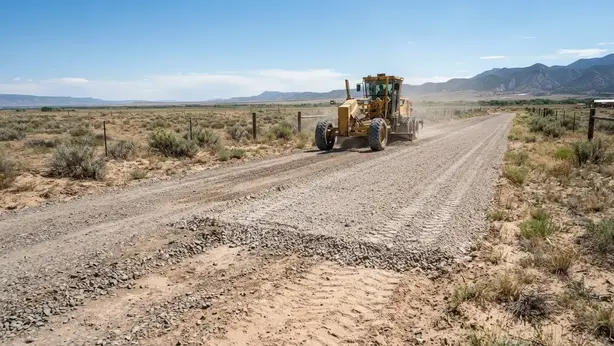
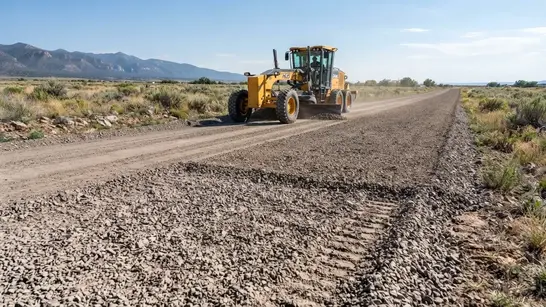
Fresh gravel being spread and graded across a rural driveway in Costilla County Colorado

Gravel placement includes distributing aggregate across the planned access route and shaping the finished surface to match the property's intended use.

Need More Than Gravel Delivered to the Property?

If your Costilla County project requires gravel to be spread, shaped, and incorporated into a driveway, private road, construction entrance, parking area, or homesite access route, the placement work should be planned along with the delivery. We can discuss where the aggregate needs to go, whether it will be stockpiled first, and what grading or shaping may be needed to create the intended access surface.

Call (719) 695-7224

Gravel Driveway Drainage, Crown & Water Movement in Costilla County

Water is one of the most important conditions to consider when planning or improving a rural gravel driveway in Costilla County. Aggregate can improve an access route, but it does not automatically solve a drainage problem. The shape of the driveway, surrounding ground, low areas, elevation changes, and existing water movement should be considered before additional material is ordered or placed.

This matters for both existing driveways and new access routes serving rural acreage near San Luis, Blanca, Fort Garland, San Acacio, and surrounding Costilla County communities. A driveway may cross undeveloped property before reaching a future homesite, private road, parking area, workshop, or other improvement. Understanding how water interacts with that access route can help determine whether the project primarily needs additional gravel or also requires grading and related site preparation.

  • Driveway Shape & Crown:
    The finished driving surface should be shaped intentionally rather than treated as a completely flat strip of gravel. Where appropriate, the surface shape can help water move away from the usable driving area instead of remaining concentrated on the route.
  • Surface Water:
    Rain and runoff can move across rural property and toward or across a driveway. Understanding where water is coming from and where it can reasonably move is important when planning the shape and finished condition of the access route.
  • Low Areas:
    Depressions can collect water and repeatedly deteriorate a gravel driving surface. Simply filling a low spot with additional aggregate may not address the reason water continues to collect there.
  • Driveway Transitions:
    Where a driveway changes elevation, connects to another access route, enters the property, or approaches a homesite, the transition should be considered as part of the overall driveway design and water movement.
  • Ruts & Repeated Deterioration:
    Recurring ruts, washboarding, soft sections, or surface deterioration can sometimes be related to water movement or inadequate grading. Repeatedly adding surface gravel may not correct the underlying condition.
  • Water Crossing the Access Route:
    If water regularly crosses a driveway, the location and pattern of that flow should be considered before material is added. The appropriate solution depends on the site and may involve grading or other drainage work rather than simply increasing gravel depth.
  • Homesite & Property Access:
    When a driveway leads toward a future home, cabin, workshop, or other improvement, drainage considerations should be viewed as part of the larger property layout rather than treating the driveway as an isolated strip of aggregate.
  • Construction Access:
    Temporary construction access can also experience drainage related deterioration from repeated vehicle traffic. If the route will later become the permanent driveway, its temporary use should be considered when planning the overall access improvement.

More Gravel Does Not Automatically Fix Water

If water repeatedly crosses, pools on, erodes, or damages a gravel driveway, adding another layer of aggregate may provide only a temporary improvement. The existing route may need grading, reshaping, or other drainage related work before additional gravel can perform as intended.

The same principle applies to new rural driveways. Before building up the access route with aggregate, it is useful to consider how the driveway connects to the surrounding property, where water naturally moves across the site, and whether low areas or transitions could affect the finished route.

For Costilla County properties, this is particularly relevant when a driveway is being developed as part of a larger rural project. Access may eventually serve a homesite, cabin, septic system, water well, utility route, solar equipment, parking area, workshop, or other improvement. The driveway and its drainage considerations should fit into that larger property development plan.

Gravel for House Sites, Construction Access & Rural Building Projects

Gravel can become an important part of developing an undeveloped rural property in Costilla County. Before a home, cabin, workshop, garage, or other improvement is constructed, the property may need dependable access for excavators, concrete trucks, building materials, utility crews, workers, parking, and construction staging.

Construction access does not always need to be the same as the finished driveway. Some projects begin with a temporary access route or work area and later develop that route into permanent residential access. Planning gravel delivery, placement, grading, and access around the property's larger development can help avoid unnecessary rework as the homesite and other improvements are constructed.

Homesite Access

Improving the route between the property entrance and planned building area so equipment, workers, deliveries, and construction activity can reach the rural homesite.

Equipment Access

Providing a more dependable route for excavators, dump trucks, concrete deliveries, material trucks, utility crews, and other construction equipment working on the property.

Construction Staging Areas

Creating gravel areas for worker parking, equipment staging, material storage, deliveries, and temporary construction activity around the building site.

Building Site Access

Establishing practical access from the driveway or property entrance to the house pad, cabin site, workshop, garage, or other planned building area.

Material Delivery Access

Planning routes that can accommodate construction materials, gravel, concrete, equipment, septic components, utility materials, and other deliveries needed during rural property development.

Temporary Construction Roads

Developing temporary gravel routes where construction access is needed before the property's permanent driveway or internal road system is completed.

Future Permanent Driveway Access

Planning temporary construction access so the route can potentially become part of the property's permanent driveway or private access system as development progresses.

Access Grading & Preparation

Coordinating gravel access with clearing, grading, excavation, drainage related work, or other preparation needed before aggregate can be placed effectively.

Off-Grid Development Access

Supporting rural projects that may include a homesite, septic system, well or cistern, utility trenching, solar equipment, workshop, garage, or other off-grid improvements. Our off grid land preparation services are relevant when access needs to be coordinated with several planned improvements across the property.

Construction Access Should Be Planned With the Entire Property

Gravel access is often established before the final home, driveway, or other improvements are complete. The route may need to support heavy equipment and repeated deliveries during excavation, foundation work, septic installation, well work, utility installation, and building construction.

On undeveloped Costilla County acreage, it can therefore be useful to consider construction access together with the future homesite, driveway, septic or OWTS area, water supply, utility routes, parking, workshop, garage, and other planned improvements. A temporary access route that is positioned with the long-term property layout in mind may reduce the need to rebuild the route later.

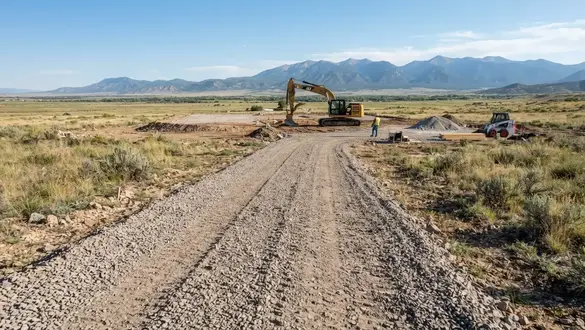
Gravel construction access route leading toward a future rural homesite in Costilla County Colorado

Gravel construction access can provide a dependable route for equipment, material deliveries, and construction activity before a rural homesite is fully developed.

Gravel for Long Rural Roads, Acreage & Extended Property Access

Gravel requirements can change substantially when an access route extends deep into rural Costilla County acreage. A long private road or internal property route can require considerably more aggregate, more delivery planning, and more placement work than a short driveway connecting a home to a public street.

Long rural access also tends to involve more than one simple driving surface. A property may have a main entrance, extended driveway, internal road, branch access, turnaround, construction route, parking area, or future homesite connection. Planning these areas together can provide a more useful picture of the total gravel requirement and where material should be delivered first.

  • Measure the Entire Route:
    Include the actual length of the private road, driveway, or internal access route that will receive aggregate. Long rural properties can require substantially more material simply because a greater distance must be covered.
  • Break Long Routes Into Sections:
    If width, surface condition, planned depth, or intended use changes along the route, measure those portions separately. Section-by-section measurements can produce a more useful gravel quantity estimate.
  • Separate Base & Surface Needs:
    A new access road may have different material requirements from an existing gravel road being resurfaced. Consider whether each section needs additional base material, surface gravel, or other preparation.
  • Plan Gravel Delivery Locations:
    Long properties may require careful planning around where loads can be unloaded, stockpiled, or later moved to the portions of the road that need aggregate.
  • Consider Turning & Access Areas:
    Turnarounds, wider approaches, parking areas, construction staging areas, and other enlarged portions of the property can add significant surface area beyond the main road alignment.
  • Check Drainage Along the Route:
    Long gravel roads can contain multiple areas where water crosses, collects, or affects the driving surface. Recurring drainage problems should be considered before simply ordering additional gravel.
  • Plan for Future Homesite Access:
    A long private road may eventually serve a home, cabin, workshop, garage, parking area, or other improvement. The access route should be considered alongside the future property layout.
  • Consider Construction Access:
    Large rural properties may need gravel for temporary construction routes, equipment access, material deliveries, and staging before the permanent improvements are completed.
  • Evaluate Existing Road Condition:
    An established private road may need resurfacing, grading, drainage work, or other preparation rather than simply receiving more aggregate. Different sections may require different levels of improvement.

Large Acreage Gravel Planning Is More Than a Single Driveway Calculation

On larger Costilla County properties, the gravel plan may involve a main driveway, extended private road, internal access route, turnaround, construction entrance, parking area, or future homesite connection. Looking at the property as a whole can help identify where aggregate is actually needed first and where future improvements may change the access requirements.

Long distance gravel delivery also makes material quantity and delivery logistics more important. Measuring the route in sections, identifying unloading or stockpile locations, and separating the driveway from additional gravel areas can make it easier to estimate the total material requirement and organize the delivery plan.

More gravel is not automatically the answer when an existing private road has recurring problems. Ruts, drainage issues, soft sections, erosion, or inadequate grading may require related earthwork before additional aggregate can provide a lasting improvement. Our driveway and road grading services may be relevant when the access route needs reshaping, while excavation and site preparation may be appropriate for more extensive ground conditions.

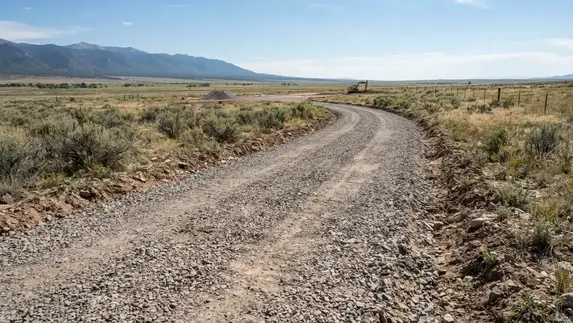
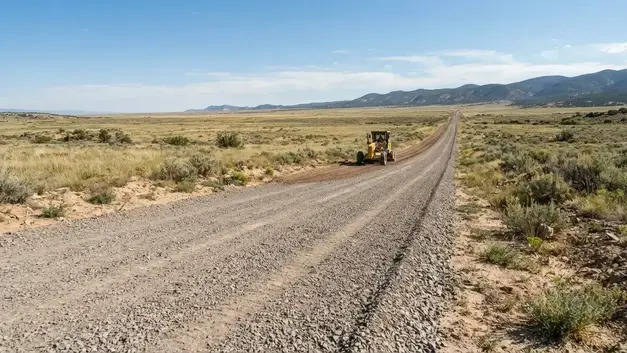
Long graded gravel road extending across undeveloped rural acreage in Costilla County Colorado

Long rural roads can require substantially more aggregate, delivery planning, grading, and access coordination than a short driveway.

Planning Gravel Around Septic, Wells, Utilities & Off-Grid Improvements

Gravel delivery can intersect with nearly every other part of rural land development. On undeveloped Costilla County property, a driveway or access route may eventually serve a house site, septic system, water well, utility trench, solar equipment, workshop, garage, parking area, or other improvement. Planning aggregate delivery around the larger property layout can help avoid placing access in locations that later interfere with construction or future improvements.

The goal is not to determine the engineering or permitting requirements for those systems, but to understand how people, equipment, materials, and service vehicles will need to reach the different work areas. This becomes especially useful when gravel is being delivered to rural acreage that is still in the early stages of development.

Septic System Access

Consider the driveway and gravel access route alongside the planned wastewater area and the access needed for septic installation, construction equipment, service work, and future maintenance. Our septic system installation information explains additional site considerations for rural wastewater projects.

Water Well Access

If a water well is planned for the property, access may need to reach the intended work area while also connecting the well location to the broader homesite and property access layout. Review our water well drilling information when planning access for a rural water supply.

Utility Trenching Access

Electrical, communications, water, and other utility routes may cross or follow portions of the property. Planning access around future trenching can help coordinate gravel work with the larger development sequence. Review our utility trenching services when underground infrastructure is part of the planned property layout.

Driveway & Utility Coordination

Utility routes may cross or connect with driveway and access areas depending on the property's planned layout. Considering those locations before final gravel placement can help reduce unnecessary disruption when future utility work begins.

Off Grid Property Access

Rural off grid projects may involve solar equipment, batteries, water systems, septic, storage, and other separate work areas. Gravel access should support the overall property layout rather than being planned around only the first improvement.

Future Homesite Access

If the property will eventually receive a house or cabin, consider how the driveway and construction route will connect to the future building area before placing substantial aggregate.

Workshop & Garage Access

Detached workshops, garages, storage buildings, and other rural improvements may require their own equipment and vehicle access. Gravel areas can be planned around those future uses as the property develops.

Construction Sequencing

Gravel access may be needed before the permanent driveway, house, or other improvements are complete. Planning delivery and access around the construction sequence can reduce unnecessary movement and rework.

Property Wide Access Planning

Larger Costilla County properties may have a main driveway, internal road, homesite, parking area, utility routes, and several work zones. Looking at those connections together can produce a more practical gravel and access plan.

Plan Gravel Around the Property's Future Use

A driveway that works for vacant acreage may need to serve a very different purpose once construction begins. Excavators, delivery trucks, utility crews, septic contractors, well contractors, and building crews may all need access to different portions of the property as development progresses.

Before placing substantial aggregate, consider the planned house site, septic or wastewater area, water system, utility routes, parking, workshop, garage, and other improvements. The gravel itself does not determine where those systems should be installed, but the access plan can be considered alongside the property's future layout.

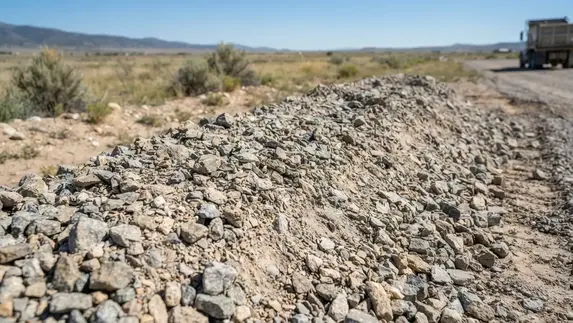
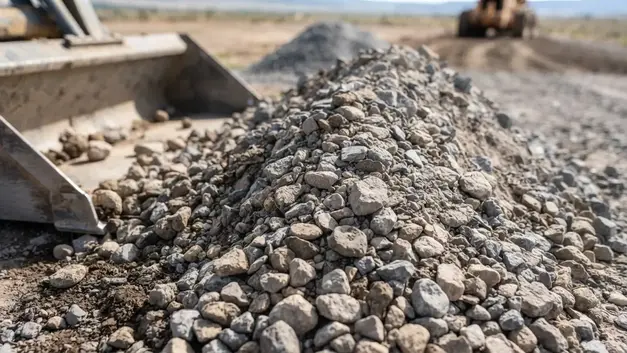
Close-up of freshly graded gravel aggregate and material texture on a rural property development site in Costilla County Colorado

Gravel access can be planned as part of the larger property layout when future homesites, utilities, septic, wells, workshops, or other improvements are expected.

Planning Gravel Around a Larger Rural Property Development?

If your Costilla County property will eventually include a homesite, septic system, well, utility trenching, solar equipment, workshop, garage, parking area, or other improvements, gravel access should be considered as part of the broader development sequence. We can discuss the driveway, construction access, material delivery areas, and gravel placement needs you are considering as the property moves from undeveloped acreage toward its planned use.

Call (719) 695-7224

Common Rural Gravel Driveway Problems in Costilla County

Gravel driveways can develop problems for many different reasons, and adding more aggregate is not always the first or only answer. Standing water, repeated traffic, surface deformation, inadequate preparation, uneven grading, and material movement can all affect how a rural driveway performs. Identifying the underlying problem can help determine whether the project needs additional gravel, reshaping, drainage related work, or more substantial preparation.

These issues can be especially important on rural Costilla County properties where a driveway may serve a longer access route, construction area, future homesite, workshop, garage, or other improvement. A driveway that looks acceptable in one section may need different work farther along the route, so problem areas should be considered individually rather than assuming the entire driveway needs the same treatment.

Standing Water

Persistent water in the driving area can weaken or disturb the gravel surface. Adding more aggregate without considering how water is reaching or leaving the area may provide only temporary improvement.

Deep Ruts

Repeated vehicle traffic can deform a gravel driveway and create channels in the driving surface. If ruts continue to return after new material is added, reshaping, grading, or additional preparation may need to be considered.

Washboarding

Repeating corrugations across the driving surface can make a rural route uncomfortable and difficult to maintain. Simply adding another thin layer of gravel may not correct the conditions contributing to the repeated surface pattern.

Gravel Loss

Aggregate can move away from heavily traveled areas or become displaced over time. Before ordering replacement material, consider whether grading, drainage, traffic patterns, or the existing driveway condition is contributing to the material loss.

Uneven Surface

Depressions, high spots, and irregular transitions can make an otherwise usable gravel route difficult to drive and maintain. Reshaping or grading may be needed before additional aggregate is placed.

Potholes & Depressions

Repeated potholes or localized depressions can develop where traffic, water, or surface deterioration affects the driveway. Filling the holes alone may not provide lasting improvement if the surrounding surface also needs to be reshaped.

Soft or Failing Sections

Some portions of a rural driveway may perform differently from the rest of the route. A recurring soft or unstable section may require more than surface gravel, depending on the existing ground and how the area is being used. Where the route needs more extensive ground work, excavation and site preparation may be relevant before additional aggregate is placed.

Heavy Construction Traffic

Excavators, dump trucks, concrete deliveries, material trucks, and other construction traffic can place different demands on a driveway than ordinary passenger vehicles. Construction access may need to be considered separately from the property's finished driveway surface.

Long Rural Access Routes

Long driveways and private roads can develop different problem areas along the same route. Sections with different surface conditions, drainage behavior, traffic levels, or planned uses may need to be evaluated separately rather than treated as one uniform driveway.

Access That No Longer Fits the Property

A driveway designed for vacant acreage may need to support a future homesite, workshop, garage, parking area, septic work, utility installation, or construction activity. Changes in property use can make the original access plan less practical over time.

More Gravel Is Not Always the Complete Fix

When a gravel driveway develops ruts, potholes, washboarding, standing water, or recurring soft areas, it is useful to consider what is causing the problem before ordering another load of material. Additional gravel can improve a surface when material is what the route needs, but it cannot automatically correct every grading, drainage, or preparation problem. Depending on the condition of the route, consider driveway and road grading or land grading and leveling before deciding that more aggregate alone is the answer.

On a rural Costilla County property, the solution may also depend on how the driveway is being used. A short residential entrance, a long private road, a construction access route, and an access road serving a future homesite can have very different demands. Looking at the condition of the existing route and the property's intended use can help determine whether the project calls for additional aggregate, grading, reshaping, drainage related work, or more extensive driveway preparation.

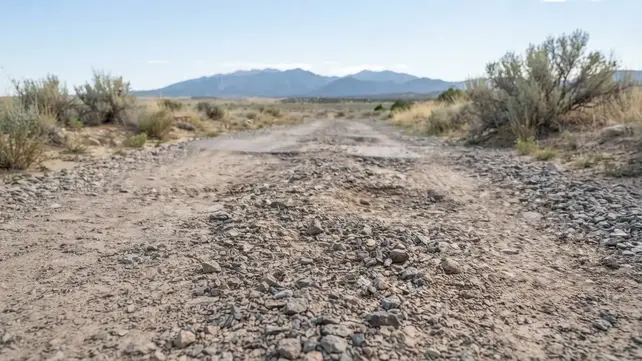
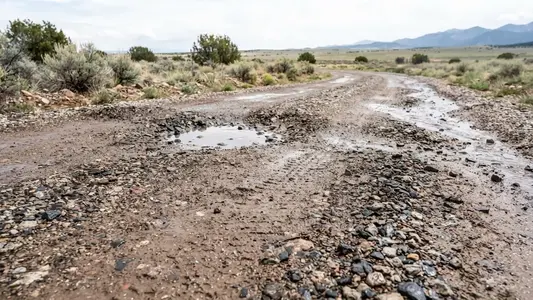
Close-up of a rural gravel driveway showing ruts, tire impressions, uneven aggregate, and surface deterioration in Costilla County Colorado

Ruts, washboarding, potholes, displaced aggregate, and uneven sections can indicate that a gravel driveway needs more than another layer of material.

Dealing With a Gravel Driveway That Keeps Deteriorating?

If ruts, potholes, washboarding, standing water, soft sections, or displaced gravel keep returning, the driveway may need more than another load of aggregate. We can discuss the condition of the existing route and whether gravel, grading, reshaping, drainage related work, or additional preparation may be appropriate for the property.

Call (719) 695-7224

Weather, Freeze & Seasonal Gravel Conditions in Costilla County

Seasonal weather can affect how rural gravel driveways, private roads, and construction access routes perform over time. Freezing and thawing, snow, precipitation, wet conditions, and temperature changes can expose ruts, soft areas, drainage problems, surface movement, and other conditions that may not be as obvious during dry weather.

Freeze & Thaw Cycles

Repeated freezing and thawing can change the condition of an unpaved surface and make existing ruts, depressions, soft areas, or uneven sections more noticeable. Inspect problem areas before assuming the entire route needs additional gravel.

Snow & Winter Conditions

Snow can temporarily hide potholes, drainage problems, driveway edges, and uneven sections. After conditions allow a closer inspection, check the route for changes that could affect property access or upcoming construction activity.

Wet & Soft Ground

Wet conditions can change how vehicles travel across an unpaved route and may reveal areas that do not perform like the surrounding driveway. Watch for new ruts, tire impressions, soft sections, standing water, or displaced gravel.

Rain & Runoff

Significant precipitation can reveal low areas, water movement, and portions of a driveway where aggregate is being displaced. Repeated problems may indicate that grading or drainage conditions should be considered before more gravel is added.

Seasonal Ruts

Ruts that become more noticeable after wet or freeze thaw conditions can affect vehicle access and surface performance. If the same tracks repeatedly return, the route may need reshaping or additional preparation rather than another simple surface repair.

Standing Water

Water that repeatedly collects on or beside the driving surface can affect gravel and the surrounding ground. Look for recurring low areas, water crossing the route, and locations where aggregate is being moved by runoff.

Gravel Movement

Weather and surface water can contribute to aggregate moving away from its intended location. Before replacing lost material, consider whether the driveway shape, drainage, grade, or existing surface condition is contributing to the problem.

Heavy Seasonal Traffic

Construction trucks and equipment can place different demands on a gravel route than ordinary passenger vehicles. Check access conditions before major construction activity, particularly when the route has recently experienced wet, frozen, or otherwise difficult conditions.

Seasonal Driveway Inspection

Inspect rural gravel routes after significant precipitation, periods of freezing and thawing, winter conditions, and before major construction traffic begins. Early inspection can help identify problem areas before they become larger access issues.

Check the Driveway Before Ordering More Gravel

Seasonal changes can reveal problems that are easy to overlook when a driveway is dry and relatively undisturbed. Look for recurring ruts, standing water, displaced gravel, soft sections, potholes, uneven areas, and locations where runoff appears to affect the driving surface.

Additional gravel may be appropriate when the route needs more material, but weather related deterioration does not automatically mean that more aggregate is the complete solution. Depending on the condition of the property, the project may also require driveway and road grading, land grading and leveling, drainage related work, driveway preparation, or a combination of improvements.

Close-up of damp gravel driveway showing tire impressions, minor rutting, and water accumulation after wet weather in Costilla County Colorado

Wet weather can expose soft areas, tire impressions, surface movement, displaced aggregate, and drainage related problems on rural gravel routes.

How to Prepare Your Property Before the Gravel Truck Arrives

A little delivery preparation can make a rural gravel project much easier to execute. Before the first load arrives, confirm where the truck should enter, where material should be unloaded, and whether the intended route and unloading area are ready to receive the aggregate.

This is especially useful on undeveloped Costilla County property where the delivery entrance may be different from the property's mailing address. Long driveways, private roads, future homesites, construction areas, and remote gravel routes can all require some planning before the first load is delivered.

1. Confirm the Property Entrance

Make sure the delivery driver has clear directions to the actual property entrance and knows which access point should be used. A street address alone may not identify the intended gravel delivery location on rural acreage.

2. Check the Delivery Route

Confirm that the intended driveway, private road, or property access route is usable for the delivery vehicle. Consider the route from the entrance to the planned unloading location rather than checking only the first portion of the driveway.

3. Clear Avoidable Obstacles

Remove parked vehicles, equipment, debris, temporary materials, or other avoidable obstacles from the delivery path and unloading area before the truck arrives.

4. Consider Maneuvering Space

Think about where the delivery vehicle will need to position itself to unload. Tight turns, narrow approaches, limited space, or other site conditions can affect where material can be delivered safely and practically.

5. Choose the Unloading Area

Know where each load should go before the truck arrives. If material will be stockpiled, choose a location that remains practical for later spreading, grading, driveway work, or movement to another part of the property.

6. Confirm Site Preparation

If the route needs substantial clearing, reshaping, grading, drainage related work, or excavation, determine whether that work should occur before gravel delivery rather than placing material on an area that still needs major preparation.

7. Confirm the Material Area

Review which driveway sections, parking areas, construction routes, or other property areas will actually receive gravel. Separating individual areas can make material quantities and delivery locations easier to organize.

8. Consider Future Improvements

If the gravel supports a future house, septic system, well, workshop, garage, utility installation, or other improvement, make sure the delivery and stockpile plan fits the larger property layout. For a planned solar project, consider how access and equipment areas will fit with off grid solar site preparation before finalizing the placement plan.

9. Confirm the Delivery Plan

Before delivery day, make sure the material type, approximate quantity, entrance, unloading location, and any placement or spreading expectations have been discussed so everyone understands what the delivery is intended to accomplish.

Delivery Preparation Can Prevent Avoidable Problems

Gravel delivery is easier when the entrance, access route, unloading location, and material requirements have already been considered. On rural Costilla County properties, taking a few minutes to identify the actual delivery point can be especially useful when the driveway extends beyond the visible entrance or when several areas of the property need aggregate.

If the driveway or access route still needs major clearing, grading, drainage related work, or excavation, it may make more sense to address that preparation before placing substantial amounts of gravel. The objective is to deliver the material where it can actually be used, rather than having to move it again because the site was not ready.

Dump truck delivering fresh gravel onto a prepared rural access route on a large property in Costilla County Colorado

Preparing the entrance, access route, unloading area, and stockpile location helps make rural gravel delivery more practical and efficient.

Costilla County Gravel Project Planning Checklist

Having the basic project information ready can make a rural gravel delivery discussion much more productive. The more clearly the property, access route, material areas, intended use, and existing conditions are understood, the easier it is to determine whether the project primarily needs aggregate delivery or additional site preparation.

You do not need every measurement or project detail finalized before asking about gravel. Even approximate information, photos, and a description of what you want the finished access or work area to accomplish can provide a useful starting point for discussing the project.

  • Property Location: Property address, parcel location, or nearest Costilla County community
  • Driveway or Road Length: Approximate length of the driveway, private road, or access route that will receive gravel
  • Usable Driving Width: Approximate width of the existing or planned driving surface, including sections that may be wider or narrower
  • Existing Surface Condition: Whether the area is bare ground, existing gravel, an established driveway, or a route that needs additional preparation
  • Material Type or Intended Use: What the gravel will be used for, such as a driveway, private road, construction access, parking area, homesite, or work area
  • Property Entrance Photos: Photos showing the entrance, gate, driveway connection, and surrounding access area can help explain the starting conditions
  • Driveway or Access Photos: Photos of the existing driveway, proposed route, problem areas, or sections where new aggregate will be placed
  • Intended Project Use: Whether the gravel is for everyday property access, construction traffic, a future homesite, parking, equipment access, or another use
  • Unloading or Stockpile Location: Preferred location for receiving the material and whether the gravel will be placed directly or stockpiled for later use
  • Delivery Access: Information about the entrance, driveway, private road, turning area, or other conditions that may affect truck access to the property
  • Grading or Preparation Needs: Whether the driveway or material area also needs clearing, grading, reshaping, drainage related work, excavation, or other preparation
  • Separate Gravel Areas: Any additional parking area, turnaround, construction entrance, building access, workshop area, or other location that will need aggregate
  • Future Building Plans: Planned house, cabin, workshop, garage, parking area, or other improvement that the driveway or gravel route will eventually serve
  • Planned Infrastructure: Known septic, well, water, electrical, communications, utility trenching, or other infrastructure planned for the property
  • Off-Grid Improvements: Planned solar equipment, batteries, water systems, storage, or other off-grid improvements that may affect property access and material placement

You Do Not Need Every Detail Before Getting Started

Rural gravel projects are often planned before every measurement or future improvement has been finalized. Approximate dimensions, property photos, the intended use of the gravel, and a description of the existing access can provide a useful starting point for discussing the project.

If the property is still being developed, it is also helpful to mention any known future homesite, septic system, well, utility work, workshop, garage, parking area, or off grid improvement. If you are still researching vacant acreage, our Costilla County land buying guide can help you identify property-access and development questions to investigate. Once you understand the planned use, the appropriate off grid land preparation or individual site work services can be considered as part of the broader project.

Rural gravel driveway project being measured and planned on undeveloped Costilla County property

Gravel projects on rural property are easier to plan when driveway dimensions, access conditions, material needs, unloading locations, and future improvements are considered together.

Common Rural Gravel Projects in Costilla County

Gravel requirements depend heavily on what the property owner is trying to accomplish. A new access route to vacant acreage is a different project from resurfacing an existing driveway, supporting construction, or preparing access for a future homesite. These examples show how gravel delivery needs can change with the property and intended use.

Rural Costilla County properties can develop in stages, so the first gravel project may only be one part of a larger plan. Thinking about the intended use of the property can help determine where material is needed, how it will be delivered, and whether additional grading, preparation, or access work should be coordinated with the delivery.

New Rural Homesite

A property owner developing a future home may need initial driveway access, construction access, parking, and additional gravel around the building area as the project progresses.

Existing Driveway Refresh

An established gravel driveway may simply need additional surface material, while ruts, drainage problems, uneven areas, or significant deterioration may indicate that grading or preparation should happen before more gravel is placed.

Long Acreage Access

A rural parcel with a long internal access route requires attention to route dimensions, truck access, unloading locations, material quantities, and how the road will support the property's future use.

Off Grid Property

An off grid property may need gravel for the main driveway, construction access, parking, utility work, well access, septic installation, solar equipment, and other phases of development.

Workshop or Garage

Detached buildings may require a dedicated approach, parking area, equipment access, or additional working surface beyond the property's primary driveway.

Construction Entrance

Some projects need improved access before permanent site development begins. Gravel can provide a practical construction route while the larger property improvements are being completed.

One Property May Have Several Gravel Projects

Rural development rarely stops with a single driveway. A property may begin with basic access, then require additional gravel for construction traffic, a homesite, parking, a workshop, utility work, or other improvements as development continues.

If several improvements are planned, it can be useful to consider the gravel delivery and access layout as part of the larger property plan. This can help identify which areas need material now, which can wait, and where future construction or infrastructure work may affect the placement of aggregate.

Newly improved gravel driveway and private access road across rural Costilla County property

Rural gravel projects can range from driveway improvements to long private roads, construction access, parking areas, and access serving future homesites.

Gravel Delivery Costs in Costilla County, Colorado

Gravel delivery costs in Costilla County depend on the amount of material needed, the type of aggregate, the delivery location, and the conditions required to unload the material. A small driveway resurfacing project may require far less material than a long private road, construction access route, or large rural property.

Material quantity is only part of the overall project cost. Driveway length and width, planned material depth, number of loads, truck access, unloading, stockpiling, hauling, placement, spreading, grading, and existing site conditions can all affect the final scope. Clearing, excavation, reshaping, or other preparation may be priced separately.

Common Gravel Delivery Project Investment Ranges

Small Driveway Gravel Delivery

$1,500 to $5,000+

Smaller projects such as driveway touch-ups, limited resurfacing, parking areas, or localized material replacement. Quantity, material selection, access, and delivery requirements affect the final scope.

Multi-Load Driveway Delivery

$3,000 to $10,000+

Larger driveway projects requiring multiple loads for additional surface material, driveway improvement, or expanded access. Material quantity and delivery logistics become increasingly important.

Long Private Road Gravel

$5,000 to $20,000+

Longer rural driveways and private access roads can require substantially more aggregate. Delivery locations, material quantity, existing road condition, and future property use also affect scope.

Construction Access Gravel

$5,000 to $15,000+

Construction entrances, equipment routes, staging areas, and temporary access improvements may require aggregate before permanent development is complete. Scope depends on the area and construction traffic.

Homesite & Building Area Gravel

$5,000 to $15,000+

Future homesites, cabins, workshops, garages, parking areas, and building access may need gravel for construction or working areas. Delivery may be coordinated with excavation and site preparation.

Large Rural & Off-Grid Projects

$10,000 to $30,000+

Larger acreage projects may involve multiple gravel areas, extended access routes, construction traffic, parking, and future infrastructure. Multiple delivery locations and related earthwork can expand the scope.

What affects gravel delivery costs? Material quantity, aggregate type, driveway length and width, planned material depth, number of loads, delivery location, truck access, unloading conditions, stockpiling, hauling, placement, spreading, grading, existing driveway conditions, site preparation, mobilization, and related earthwork can all influence the cost of a rural gravel project in Costilla County.

Dump truck delivering gravel to a rural driveway on undeveloped Costilla County property

Gravel delivery scope depends on material quantity, truck access, unloading conditions, delivery locations, and the amount of preparation or placement required at the property.

Want to Discuss Your Gravel Delivery Project?

Gravel delivery costs depend on the property, material quantity, delivery location, truck access, unloading conditions, and whether additional placement, grading, or site preparation is needed. Tell us what you are planning and we can discuss the project scope and the conditions that may affect the work.

Call (719) 695-7224

Gravel Delivery Cost Factors in Costilla County, Colorado

Gravel delivery pricing can vary significantly from one Costilla County property to another. The final scope depends on the amount of aggregate needed, the intended use, where the material must be delivered, how the property can be accessed, and whether additional placement, grading, or site preparation is required.

A short driveway near an established entrance is a different project from a long private road serving undeveloped acreage. Construction access, future homesites, parking areas, workshops, garages, cabins, and other rural improvements can also change where gravel is needed and how the material should be delivered.

Project Size & Material Quantity

Longer driveways, wider access routes, parking areas, and multiple gravel sections require more aggregate. Length, usable width, planned material depth, and the number of areas being improved all affect the quantity needed.

Material Type & Intended Use

Gravel requirements can differ depending on whether material is intended for a driveway surface, base, private road, construction access, parking area, or another property improvement. The intended use should be considered before ordering material.

Number of Delivery Loads

Larger projects may require multiple loads of aggregate. The number of loads, delivery sequence, unloading locations, and whether material is delivered to one area or several parts of the property can affect the overall delivery scope.

Rural Truck Access

Rural properties can have long driveways, narrow approaches, limited maneuvering space, gates, turns, or remote unloading areas. These conditions can affect how aggregate reaches the intended location and how the delivery is organized.

Delivery & Unloading Location

Where gravel is unloaded matters as much as how much is ordered. Material may need to be delivered near the entrance, along a private road, at a future homesite, near construction activity, or at a stockpile location for later placement.

Placement & Site Preparation

Gravel delivery is different from spreading and grading. If the driveway or material area also needs clearing, excavation, reshaping, placement, spreading, or grading, those services can add to the project scope. Depending on the site, this may involve land clearing, land grading and leveling, or excavation and site preparation before or alongside aggregate placement.

Existing Driveway Condition

A driveway needing additional surface material has a different scope from one with deep ruts, potholes, soft sections, drainage problems, or significant deterioration. Existing conditions should be evaluated before simply ordering more gravel.

Drainage & Water Movement

Standing water, runoff crossing the driveway, low areas, or repeated gravel displacement can affect the work required. Adding more surface gravel may not address a problem caused by driveway shape or water movement.

Long Rural Roads & Acreage

Large rural properties may have extended internal roads or access routes rather than a single driveway. Longer routes can require more aggregate, additional delivery planning, multiple unloading locations, and separate consideration of different sections.

Construction Access

Construction traffic can create different gravel requirements from ordinary property access. Equipment routes, material delivery access, staging areas, temporary access, and future permanent driveway connections may require aggregate at different stages.

Homesite & Building Access

Future homesites, cabins, workshops, garages, and other rural improvements may need gravel for construction access, parking, or working areas. Planning these locations early can help coordinate delivery with the larger property layout. When the project includes a prepared building pad, review our house pad preparation services alongside the access and gravel requirements.

Road Access Planning

Access to a property can involve more than the gravel surface itself. Costilla County has a Road Access Permit process, and its application addresses proposed access location, driveway plans, drainage, utilities, property access design, and easements. Verify applicable requirements before starting a new access connection. Once access requirements are understood, our driveway and road grading services may be relevant when the route needs grading or surface preparation.

Every Rural Gravel Project Has Different Cost Factors

Two driveways with similar dimensions can have different project costs when their access, existing condition, material requirements, unloading locations, or preparation needs are different. A short driveway may need only additional surface gravel, while a larger rural project may involve several loads, stockpiling, placement, grading, drainage related work, or construction access.

This matters on undeveloped Costilla County acreage because gravel may be only one part of a larger property development sequence. Driveway access, construction traffic, parking, a future homesite, utility trenching, septic installation, or water well drilling may all affect how and when gravel should be delivered.

For that reason, gravel pricing is best considered as a project scope rather than a simple price per load or per mile. Property location, approximate dimensions, intended use, material requirements, truck access, unloading location, existing conditions, and related site work all help determine the amount of material and services involved.

Gravel Delivery Service Area Throughout Costilla County

We provide rural gravel and aggregate delivery throughout Costilla County, Colorado. Our services support rural landowners, homesteaders, future homeowners, cabin owners, ranch and agricultural property owners, and off grid property owners who need material for driveways, private roads, construction access, building sites, parking areas, workshops, garages, and other rural property improvements. Projects can include new driveway material, existing driveway resurfacing, private road aggregate, construction access material, gravel for building sites, and delivery for larger rural land development projects.

  • San Luis, CO
  • Blanca, CO
  • Fort Garland, CO
  • San Acacio, CO
  • San Francisco, CO
  • Mesita, CO
  • Chama, CO
  • San Pedro, CO
  • Los Fuertes, CO
  • Garcia, CO
  • Jaroso, CO
  • San Pablo, CO
  • Viejo San Acacio, CO
  • Surrounding Rural Communities

Gravel requirements can vary substantially from one Costilla County property to another. A short existing driveway may only need additional aggregate, while a new rural access route may require substantially more material across a longer distance. Other projects may involve private roads, construction entrances, parking areas, building site access, or several separate gravel areas on the same parcel. Driveway length, usable width, planned material depth, existing surface conditions, delivery access, and the intended use of the finished area all affect the amount and type of material needed.

Gravel delivery can also be part of a larger rural development plan. A property may need an initial construction entrance, followed by a permanent driveway, private road, house-site access, parking area, or additional aggregate around future improvements. Grading, drainage, driveway preparation, spreading, excavation, septic work, water-well access, utility installation, and off-grid development may also need to be coordinated with the gravel work. Whether you are improving an existing driveway near San Luis, establishing access to acreage near Blanca or Fort Garland, or developing a more remote rural property, the goal is to deliver material where it can support the property's actual access and development needs.

Gravel Delivery FAQs for Costilla County, Colorado

Gravel delivery on rural property involves more than ordering a few truckloads of rock. The appropriate material, quantity, delivery method, unloading location, and preparation depend on how the gravel will be used, the dimensions of the project, the condition of the existing access, and the broader development plan. These answers cover common questions about driveway gravel, private roads, construction access, aggregate quantities, material delivery, gravel placement, drainage, and rural property improvements throughout Costilla County.

What types of projects can gravel delivery support in Costilla County?
Gravel delivery can support rural driveways, private roads, property entrances, construction access, building sites, parking areas, workshops, garages, and other land development projects. The amount and type of material needed depends on the intended use, project dimensions, existing surface, and how the material will be placed.
Can you deliver gravel to undeveloped rural property?
Yes. Gravel can be delivered to undeveloped acreage when there is a practical route for the delivery truck to reach the property and an appropriate location to unload. Rural properties can have long entrances, narrow access routes, uneven ground, limited turning space, or other conditions that should be considered before scheduling delivery.
How do I know how much gravel I need?
Gravel quantity is primarily determined by the length and width of the area being improved and the intended depth of the material. Existing gravel, the condition of the underlying route, multiple areas receiving material, and the purpose of the project can also affect the quantity. Measuring the actual project area before ordering is more useful than estimating strictly by the number of truckloads.
How do you calculate gravel for a rural driveway?
Start with the driveway's approximate length and usable width, then determine the planned material depth. Those dimensions provide the basic volume calculation. The actual order may need to account for existing material, areas requiring additional depth, the condition of the route, and whether the project involves more than one layer or material.
Does a long rural driveway require more gravel?
Generally, yes. As driveway length increases, the amount of material required also increases when width and depth remain similar. This is particularly important on rural acreage where the entrance from the public road to the homesite may be substantially longer than a typical residential driveway.
Should gravel be added before grading the driveway?
Not necessarily. If an existing driveway has poor shape, drainage problems, significant ruts, low areas, or an unsuitable surface, grading or other preparation may need to occur before additional aggregate is placed. Adding gravel over an access route that has not been properly prepared can result in material being used to cover a problem rather than correcting the underlying condition.
Can you add gravel to an existing driveway?
Yes. Additional aggregate can be used to improve an existing gravel driveway when the underlying route and drainage conditions are suitable. The existing surface should be considered first because some driveways need reshaping, grading, or other preparation before new material is added.
Does more gravel always make a driveway better?
No. Gravel cannot automatically correct every driveway problem. If water repeatedly travels across the route, collects in low areas, or damages the surface, adding more material without addressing the underlying grading or drainage issue may provide only a temporary improvement. The condition of the existing driveway should be considered before deciding how much additional aggregate is appropriate.
What is the difference between driveway gravel and road base?
The terms can refer to different aggregate products or applications, and the appropriate material depends on the project. A driveway may use aggregate as part of its underlying base, surface, or both. Material selection should account for the existing route, intended use, planned depth, drainage, and whether the project is building a new access route or improving an existing one.
Can gravel be used for a new driveway on raw land?
Yes, but a new driveway on undeveloped property may require more planning than simply delivering gravel. The access route may need vegetation and brush clearing, grading and leveling, or other preparation before aggregate is placed. The proposed driveway should also make sense in relation to the future homesite, construction access, utilities, septic planning, and other property improvements.
Can gravel be delivered for a private road?
Yes. Gravel can be delivered for private roads and extended rural access routes. Because these projects can cover substantially more area than a driveway, accurate measurements and delivery planning become especially important. The road length, width, intended depth, existing surface, and areas needing additional material all affect the total quantity.
Can you deliver gravel for construction access?
Yes. Gravel can be used to establish or improve access for construction equipment, workers, material deliveries, and other project traffic. Construction access may be temporary or become part of the property's longer-term driveway or private road system, depending on the development plan.
Why is construction access important on rural property?
Rural building projects can involve repeated deliveries of equipment, concrete, building materials, utilities, and other supplies. If the existing property entrance is not suitable for that activity, improving access early can make later construction stages more practical. The access route should be considered in relation to where the building and other improvements will eventually be located.
Can gravel be used around a future house site?
Yes. Gravel may be useful for construction access, equipment staging, parking, material-delivery routes, or other areas around a developing homesite. The access and gravel layout should be considered alongside the planned building area so temporary construction needs do not unnecessarily conflict with the finished property layout.
Can gravel be delivered for a cabin or off-grid property?
Yes. Gravel delivery can support access and site improvements for cabins, off-grid homes, workshops, garages, and other rural projects. Off grid properties may involve longer access routes and several separate improvement areas, so it can be useful to consider driveway, building site, parking, utility, and construction access needs together. Review our off grid land preparation services for broader site development planning and off grid solar site preparation when access and ground preparation are part of a planned solar project.
Can gravel be used for parking areas?
Gravel can be used for rural parking areas associated with homes, cabins, workshops, garages, recreational properties, and other improvements. The required quantity depends on the size of the parking area, intended depth, existing surface, vehicle use, and whether the area also serves as construction staging or material access.
Does the delivery truck need special access?
Delivery access should be considered before ordering material. The truck needs a practical route to the unloading location, and factors such as entrance width, turning room, overhead obstacles, ground conditions, steep or constrained sections, and the location of existing improvements can affect delivery logistics.
Where should gravel be unloaded on rural property?
The unloading location should be accessible to the delivery truck and useful for the planned project. Depending on the site, material may be stockpiled in an accessible area or unloaded closer to the driveway, private road, construction entrance, building site, or other area where it will be used. Planning the unloading location beforehand can reduce unnecessary material handling.
Can gravel be delivered directly onto a driveway?
In many situations, material can be unloaded along or adjacent to the area being improved, provided the delivery vehicle can safely and practically access the location. The exact unloading arrangement depends on the driveway layout, available space, existing conditions, and the delivery vehicle's access requirements.
Is gravel delivery the same as gravel placement?
No. Delivery means transporting the material to the property and unloading it. Placement may involve spreading, shaping, grading, or incorporating the material into a driveway or other improvement. Depending on the project scope, those activities may need to be planned separately or coordinated with excavation and site preparation or land grading and leveling as part of the larger project.
Does gravel delivery include spreading and grading?
Not automatically. Gravel delivery and earthwork are related but separate parts of many rural projects. Some projects primarily require material delivery, while others also require grading, spreading, driveway reshaping, or preparation of the underlying route. The requested scope should be established before work begins.
What should be done if my driveway has drainage problems?
Drainage should be considered before simply ordering additional gravel. If water regularly crosses the driveway, collects in low areas, or washes material away, the route may need driveway grading and reshaping or other drainage related preparation. Adding aggregate without addressing recurring water movement can result in continued maintenance problems.
Can grading and gravel delivery be part of the same project?
They can be coordinated when the project requires both. A driveway or private road may need to be shaped or prepared before aggregate is delivered and incorporated into the route. Combining the planning of earthwork and material delivery can help establish the appropriate sequence instead of bringing material to a route that is not ready for it.
How does the existing driveway affect gravel requirements?
Existing conditions can significantly affect the amount of new material that makes sense. A driveway with a reasonably stable existing base may require a different approach from one with deep ruts, soft sections, inadequate width, drainage issues, or substantial elevation problems. Evaluating the existing route helps distinguish a resurfacing project from a larger driveway-preparation project.
Does driveway length affect gravel delivery cost?
It can. Longer driveways generally require more aggregate when width and depth are comparable, which can increase the number of loads required. Delivery logistics can also become more significant when material must be transported to a remote or extended access route. The total project cost depends on material quantity, delivery requirements, site conditions, and the scope of any related work.
How much does gravel delivery cost in Costilla County?
There is no single price that accurately describes every gravel delivery project. Cost can be affected by the material required, quantity ordered, number of loads, delivery distance, property access, unloading conditions, and whether the project also involves grading, spreading, driveway preparation, or other site work. A long rural driveway can have a very different delivery scope from a small parking area.
What makes a rural gravel project more expensive?
Larger quantities, long access routes, difficult delivery access, additional preparation, grading, spreading, multiple project areas, material handling, and substantial driveway or road work can all increase project scope. The amount of material needed and the logistics of getting it to the property are particularly important factors for larger rural projects.
How many truckloads of gravel will my property need?
The number of loads depends on the total material quantity and the approximate amount that can be delivered per load. The driveway or project area should first be measured by length and width, with the intended depth considered as well. If several areas need material, such as a driveway, parking area, and construction route, those quantities should be considered together.
Should I order all the gravel at once?
Not necessarily. The appropriate delivery sequence depends on the project. A new rural development may require access material first, followed by additional aggregate as the homesite or other improvements progress. Existing driveway projects may have a different sequence. Material quantities and delivery timing should be coordinated with the actual construction or land development plan.
Can gravel be used as temporary construction access?
Yes. Aggregate can be used to improve temporary construction access for equipment and material deliveries. If that route will eventually become the permanent driveway or private road, it can be useful to consider the future layout before installing temporary access so the work does not have to be unnecessarily redone later.
How does gravel fit into a larger rural development project?
Gravel may be needed at several stages of rural development. A property may first need an entrance and construction access, followed by a driveway, building site access, parking, utility work, or other improvements. Considering these areas together can help establish a more practical access plan and avoid treating every gravel requirement as an unrelated project.
Are Costilla County gravel projects different from typical residential driveway projects?
Rural projects can involve different logistical considerations because properties may have longer driveways, extended private access, undeveloped entrances, larger improvement areas, and fewer existing site improvements. The actual conditions vary from parcel to parcel, so the gravel quantity and delivery approach should be based on the specific property rather than assuming a standard residential driveway setup.
Do I need to check local requirements before improving a rural driveway?
Property owners should confirm the requirements that apply to their specific parcel and proposed work before beginning substantial grading or access improvements. Requirements can depend on the property's location, the type and extent of work, existing roads or access, and other applicable land use or development conditions. If you are evaluating undeveloped acreage before starting improvements, our Costilla County land-buying guide provides additional context for researching a property before development.
Can gravel delivery be coordinated with a house pad project?
Yes. Gravel delivery can be part of a larger homesite project involving driveway access, construction staging, building site access, parking, or other improvements. Coordinating gravel requirements with the building layout can help determine where material is needed and when it should be delivered. When the project includes preparing the building area itself, review our house pad preparation services.
What information should I provide when requesting a gravel estimate?
Useful information includes the Costilla County property location, approximate driveway or road length and width, photographs of the existing access, the intended use of the area, whether the project is new or an improvement to existing gravel, and whether grading or spreading is also needed. Information about a future homesite, construction project, parking area, or other planned improvements can also help define the larger scope.
How do I get a gravel delivery estimate in Costilla County?
Start with the property location, the approximate dimensions of the area needing gravel, photographs of the existing access, and a description of what the material will be used for. Let us know whether the project involves a new driveway, existing driveway improvement, private road, construction access, building site, parking area, or another rural improvement. If grading, spreading, drainage related work, or additional site preparation is also needed, include that information so the project scope can be considered as a whole.

Ready to Plan Your Costilla County Gravel Delivery?

Whether you need gravel for a new rural driveway, private road, construction entrance, building site, parking area, workshop, garage, or other property improvement, the delivery plan should match the size and intended use of the project. Costilla County Land Services provides gravel and aggregate delivery for rural properties throughout Costilla County, with delivery planning based on the approximate area, material quantity, access route, unloading location, and existing site conditions. If your project also requires grading, driveway preparation, spreading, or other site work, let us know when discussing the property so the gravel delivery can be considered as part of the larger project.

Call (719) 695-7224